Before you leave, let our managing team review your rigid box project. Share your product type, target market quantity, and launch timeline, and well heip evaluate the best structure, material, finish, MOQ, ond production plan for your brand
Get Sales & Packaging Engineering Support
Our Sales Team
Need help with magnetic closure boxes, lid lift-off boxes, drawer boxes, cosmetic boxes, candle boxes, perfume boxes, tea boxes, wine boxes, or promotional packaging? Send us your requirements and our sales or engineering team will help with pricing, structure, sampling, printing, anda production feasibility.
Custom Two Piece Boxes USA | Premium Rigid Packaging
A Simple Box That Quietly Exposes Bad Buyers
I’ve seen buyers spend three weeks arguing over foil color and then approve a box with a loose insert.
That’s not rare.
It’s Tuesday.
A custom two piece box looks painfully simple from the outside: lid, base, clean edges, maybe a logo sitting pretty on the top panel. But inside the quote sheet — board density, wrap paper stretch, lid-drop tolerance, EVA nest fit, greyboard warp, carton packing, freight cube — the thing becomes less like “packaging” and more like a small procurement trap with a ribbon on it.
Table of Contents
And here’s the ugly truth: most people searching for custom two piece boxes aren’t really shopping for a box. They’re shopping for confidence. They want a supplier who won’t mess up the product launch, embarrass the brand team, or ship 5,000 rigid setup boxes with corner squeeze and logo drift.
Pretty fair, honestly.
The phrase “Custom Two Piece Boxes USA” carries another problem too. “USA” sounds safe. Fast. Local. Controlled. But unless the claim is handled properly, it can turn into legal mud. The FTC’s Made in USA standard says unqualified U.S.-origin claims generally require the product to be “all or virtually all” made in the United States. And in April 2024, Williams-Sonoma agreed to pay a record $3.175 million civil penalty over Made in USA claims, according to the FTC’s case announcement.
So no, I don’t treat origin language as marketing garnish.
It’s risk language.
Custom Two Piece Boxes USA Premium Rigid Packaging
What a Two-Piece Rigid Box Really Is — Not the Brochure Version
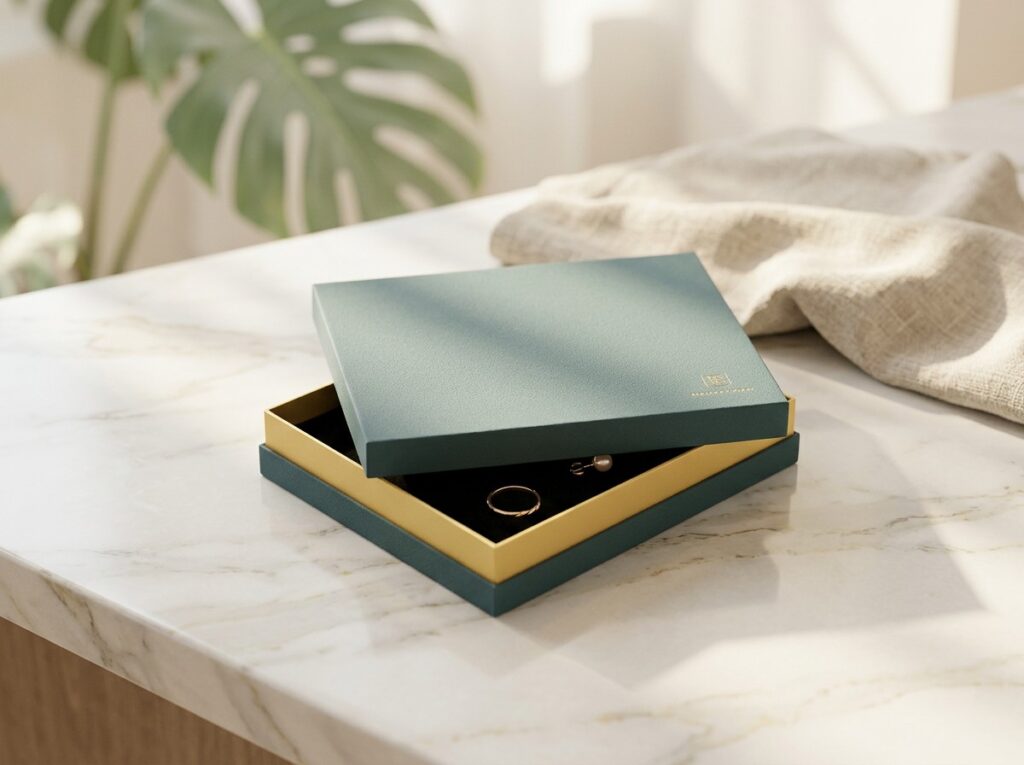
A custom two piece box is a rigid lid-and-base packaging structure made from thick paperboard, wrapped with printed or specialty paper, where the top lid slides over or fits onto a separate bottom tray. The structure is also called a lid and base rigid box, telescopic rigid box, or rigid setup box.
Fine. That’s the clean definition.
But in the factory, the difference between a solid two-piece rigid box and a cheap “looks okay in photos” box usually comes down to boring stuff that nobody posts on LinkedIn: paper overhang, wrap cracking, lid friction, inner tray squareness, glue line control, and whether the insert was tested with the real product or just an empty CAD file.
I frankly believe most rigid box problems start before production.
Bad brief. Bad sample. Bad assumptions.
Buying Factor
What It Means
Why It Affects Cost
What I Would Check
Board thickness
Common rigid board range: roughly 800–1500 gsm equivalent
Thicker board adds strength, weight, and freight cost
Does the sample collapse, bow, or feel hollow?
Lid depth
Full telescope, partial telescope, or shallow lid
Deeper lids use more material and can feel more secure
Does the lid slide smoothly without suction problems?
Wrap paper
Art paper, specialty paper, textured paper, laminated print
Premium surfaces increase finishing risk
Are corners clean under light?
Insert type
EVA foam, paperboard tray, molded pulp, PET blister, velvet card
Inserts drive tooling, fit, and product protection
A buyer who can read that table properly will avoid half the nonsense that gets sold as “premium rigid packaging boxes.” Thick board doesn’t save weak wrapping. A nice foil stamp doesn’t save poor lid fit. And a gorgeous printed wrap means nothing if the product rattles like loose hardware inside the tray.
For a practical structure reference, this printed two-piece rigid crystal handle box with foam insert shows the kind of pairing that actually matters: rigid shell, presentation value, and an insert doing real work instead of sitting there as decoration.
Custom Two Piece Boxes USA Premium Rigid Packaging
The USA Buyer Isn’t Always Buying “Made in USA”
But let’s be honest.
When a procurement manager types “custom two piece rigid boxes USA,” they may not mean they require domestic manufacturing. Sometimes they mean: answer my emails in my time zone, don’t fake your specs, give me a sample that matches mass production, and don’t disappear after the deposit.
That’s the real search intent.
In 2024, U.S. annual retail e-commerce sales were estimated at $1.1926 trillion and accounted for 16.1% of total retail sales, according to the U.S. Census Bureau’s Quarterly Retail E-Commerce Sales report. That number changes the packaging conversation. More online sales means more shipped first impressions, more crushed corners, more warehouse handling, more returns, more unboxing content, and more customers judging your product before they’ve even used it.
Tiny scratch. Big damage.
A two-piece rigid setup box can look fantastic, but I wouldn’t ask it to behave like a shipper unless the full pack-out is engineered. If the product ships individually through parcel networks, you probably need an outer mailer, corrugated carton, or protective master carton. For industrial or heavier products, a structure like a printed corrugated shipping box for industrial oil seal parts is more honest than pretending a luxury rigid box can take abuse it was never designed for.
So the better question isn’t, “Is this box strong?”
Strong where?
On shelf? In a master carton? In a FedEx drop? In a humid container? Under six cartons stacked in a warehouse in August?
Different answers.
Where Custom Two Piece Boxes Actually Earn Their Keep
I like two-piece rigid boxes when the product needs a pause.
That’s the whole trick. The lid slows the customer down. It creates a small moment of resistance, then reveal. For beauty, jewelry, fragrance, cannabis, tech accessories, and premium gifting, that delay can make the product feel more expensive than the material cost alone would suggest.
But don’t get romantic.
Use them where the margin supports them.
Good use cases include:
Cosmetics gift sets
Jewelry and watches
Fragrance discovery kits
Consumer electronics
PR influencer boxes
Cannabis and CBD presentation packaging
Premium tea, chocolate, and gourmet food
Corporate gifting
Retail launch kits
Bad fit? Low-margin refills. Heavy parts. Commodity products. Anything where warehouse teams hate bulky packaging and the customer throws the box away in six seconds.
From my experience, brands often overbuy “luxury” and underbuy fit. A rigid box with a sloppy insert feels worse than a cheaper folding carton that holds the product properly. Harsh? Maybe. True? Usually.
Wholesale Pricing: The Stuff Suppliers Don’t Always Put Up Front
A rigid setup box normally ships assembled unless it’s designed as a collapsible rigid box. That means you’re shipping air. Literal paid air. If your box is too tall because the insert wasn’t engineered tightly, you may pay for that mistake every time a container, pallet, or courier carton is calculated by volume.
Ask for separated quote lines. Always.
Quote Line
Why It Matters
Buyer Note
Board grade and thickness
Determines hand-feel and compression strength
Ask for actual board spec, not “premium board”
Printed wrap paper
Controls color, texture, and branding
Confirm CMYK vs Pantone before sampling
Tooling / mold fee
Common for inserts, dies, and specialty shapes
Ask if it is reusable for repeat orders
Finish setup
Foil, embossing, debossing, spot UV, lamination
Defects often appear at corners and logo edges
Insert cost
Foam, paperboard, molded pulp, PET, velvet card
Product fit should be tested with real samples
Packing method
Carton size, pieces per carton, palletization
This affects freight and warehouse handling
Lead time
Sampling + production + sea/air freight
Separate factory lead time from transit time
Here’s another ugly truth: if a supplier can’t explain why a rigid box costs more than a folding carton, they probably don’t understand the structure deeply enough. Or they’re just selling whatever has the best margin.
A serious packaging supplier should know when to recommend rigid packaging and when to push you toward lighter paperboard, like a printed window paperboard box for supplement gummies. That kind of honesty matters. I trust suppliers more when they say, “Don’t use rigid here.”
Because sometimes you shouldn’t.
Custom Two Piece Boxes USA Premium Rigid Packaging
Inserts: The Quiet Place Where Launches Fail
People love the outside of the box.
I watch it happen all the time: brand managers obsess over soft-touch lamination, foil shade, logo placement, Pantone matching, and whether the corner radius feels “premium.” Then the insert gets treated like an afterthought.
Bad move.
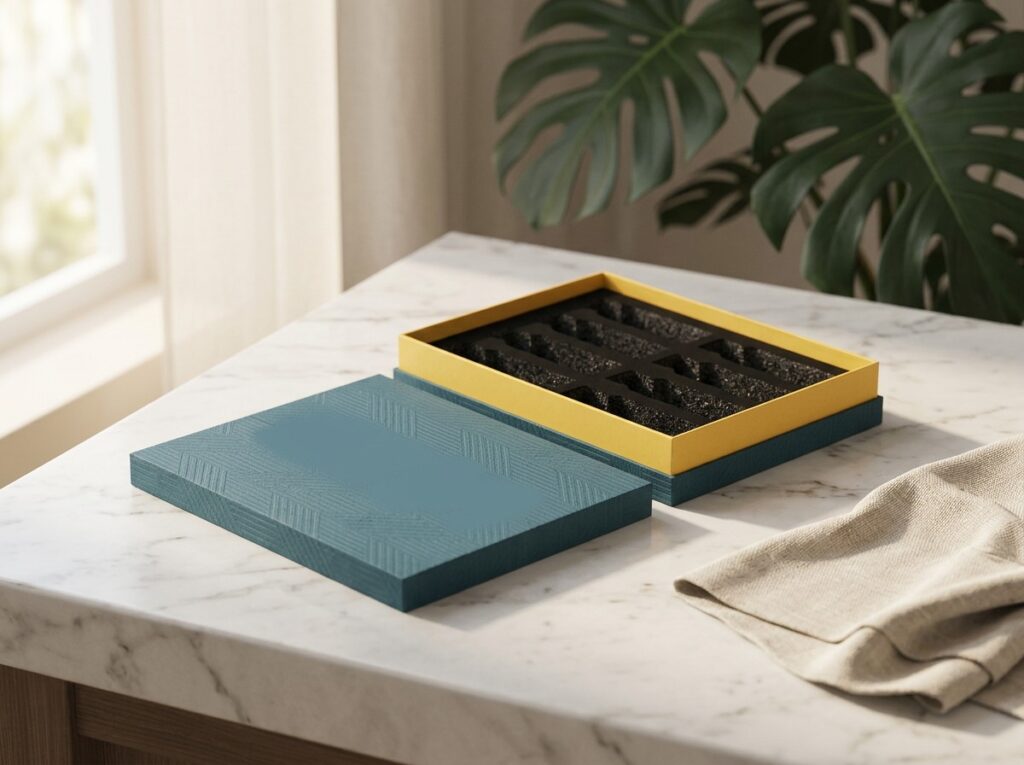
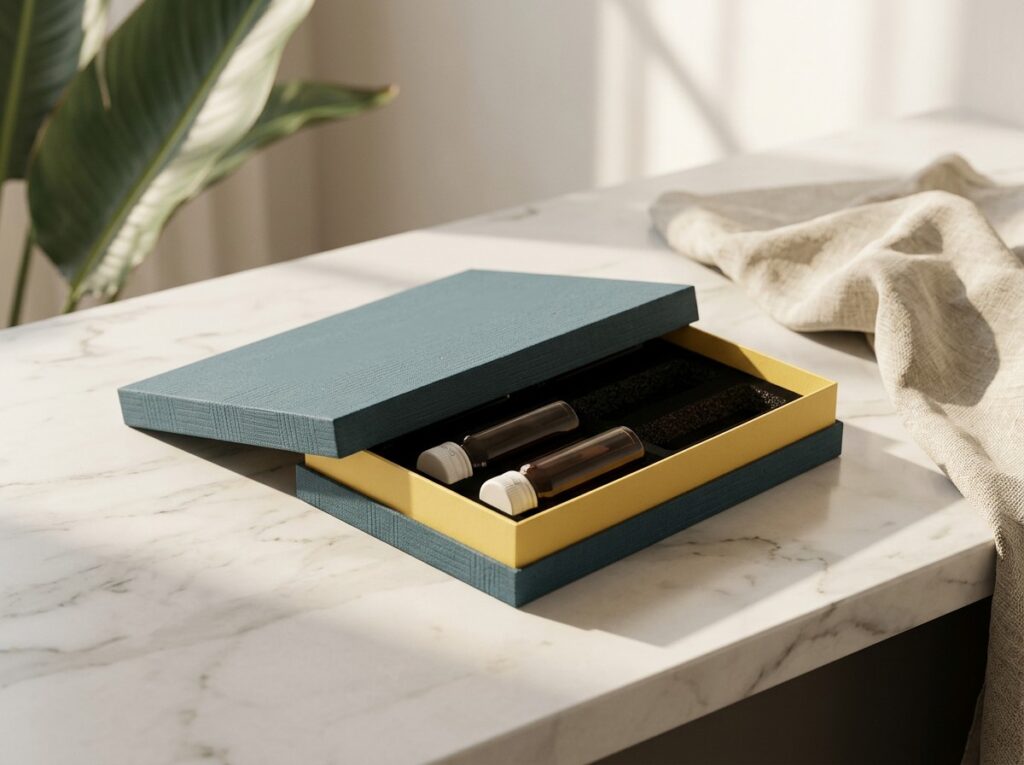
The insert decides whether the product arrives centered, protected, and camera-ready. For custom rigid boxes with inserts, I’d rather talk about product tolerance, compression, finger notch clearance, release force, scuff risk, and whether the customer can actually remove the item without digging at it like a trapped coin.
Foam grips well. Molded pulp gives you a better sustainability story. Paperboard trays can be clean and cost-efficient. PET blister inserts are precise and visible, though plastic content may complicate sustainability claims in some markets. Velvet cards can look expensive — or dusty and old-fashioned, depending on execution.
No universal winner.
Only fit.
Packaging waste isn’t a side conversation anymore either. The EPA says containers and packaging accounted for 82.2 million tons of municipal solid waste generation in 2018, or 28.1% of total generation, in its containers and packaging data. In Europe, Reuters reported in March 2024 that negotiators agreed on rules targeting packaging waste reduction, with all packaging required to be recyclable by 2030 under the proposed framework in that report: EU provisionally agrees on law to cut packaging waste.
That’s why I dislike fluffy claims like “eco luxury box.”
Say what it is.
FSC paper option. Recycled paper content. Molded pulp insert. Plastic-free route. Laminated or unlaminated. Separable components. Glue choice. Coating type. End-user disposal reality.
That sounds less sexy. It sells better to serious buyers.
Custom Two Piece Boxes USA Premium Rigid Packaging
Lid-and-Base Boxes vs Other Rigid Box Structures
Two-piece rigid boxes are familiar, but they’re not automatically the smartest structure. A magnetic box may be better for repeated opening. A drawer box may create a smoother reveal. A folding rigid box may save warehouse space. A book-style box may work harder for PR kits.
The structure should follow the product, not the designer’s mood board.
Structure
Best For
Strength
Weakness
Buyer Take
Two-piece rigid box
Jewelry, cosmetics, gifts, PR kits
Classic luxury reveal
Can ship bulky
Best all-around presentation format
Magnetic closure box
Beauty, fragrance, electronics
Strong retail opening experience
Magnet cost and recycling concerns
Better for repeated opening
Drawer rigid box
Accessories, tech, tea, chocolate
Smooth reveal and strong shelf value
Sleeve friction must be controlled
Excellent for sets and collections
Book-style rigid box
PR kits, media kits, luxury launches
Dramatic presentation
Larger footprint
Good when storytelling matters
Folding rigid box
E-commerce gifting, lower freight cost
Ships flatter than setup boxes
Less solid than setup rigid
Useful when storage cost matters
This is where product-category thinking helps. A broader path like boxes by industries lets buyers map the product to the packaging family before anyone wastes time on the wrong dieline.
Because yes, wrong dielines happen.
More than people admit.
My Bias: I’d Rather See a Cleaner Box Than a Louder One
I’ll say the unpopular part.
Most overdesigned rigid boxes are procurement failures wearing nice photography.
Soft-touch plus foil plus embossing plus spot UV plus ribbon plus foam plus tiny MOQ plus “urgent launch” is not a strategy. It’s a defect-rate invitation. Every extra finish adds another point where production can go sideways: foil misregistration, lamination scuffing, wrap cracking, glue staining, color shift, lid suction, insert misfit.
And when the brand says, “But the sample looked perfect,” I already know the story.
A hand-finished sample is not mass production.
Mass production has yield. Scrap. Operator fatigue. Board batch variation. Humidity. Drying time. Packing pressure. Corners that looked fine at 2 p.m. and lifted after a week in transit.
So I frankly believe premium packaging starts with refusal. A good supplier should push back. Not rudely. Not lazily. But clearly.
Don’t use that finish at that MOQ.
Don’t make the lid that tight.
Don’t claim USA origin unless the claim is documented.
Don’t use foam if your sustainability page says plastic-free.
Don’t build a rigid setup box when a folding carton would protect the margin better.
That’s not pessimism. That’s packaging experience.
FAQs
What are custom two piece boxes?
Custom two piece boxes are rigid lid-and-base packaging structures made with a separate top lid and bottom tray, typically using thick paperboard, printed wrap paper, and optional inserts for product protection, presentation, and brand positioning in retail or gift applications. They are also called lid and base rigid boxes, telescopic rigid boxes, or two piece rigid setup boxes.
They’re popular because they create a slower, more premium reveal. The lid lifts, the product sits inside the base, and the whole thing feels more substantial than a folding carton. But they cost more, ship bulkier, and need tighter engineering if the product is fragile or e-commerce-heavy.
Are two piece rigid boxes good for wholesale packaging?
Two piece rigid boxes are good for wholesale packaging when the product needs high perceived value, controlled presentation, and stronger shelf impact than folding cartons or lightweight mailers can provide. They work best for cosmetics, jewelry, electronics, fragrance, cannabis, CBD, gifting, and premium food products where packaging influences buyer trust and retail pricing.
Wholesale buyers should still check carton packing, unit cube, insert cost, and defect tolerance. A beautiful rigid box that wrecks freight math is not a bargain. It’s a warehouse complaint waiting to happen.
What is the difference between a two piece rigid box and a folding carton?
A two piece rigid box uses thick, non-collapsible paperboard wrapped with printed or specialty paper, while a folding carton uses thinner paperboard that ships flat and folds into shape. Rigid boxes feel heavier and more premium, but folding cartons are usually cheaper, lighter, faster to pack, and more efficient for mass retail distribution.
I’d use rigid for presentation and price signaling. I’d use folding cartons when speed, shelf efficiency, and unit cost matter more. Different jobs. Different tools.
Can custom two piece boxes be made with inserts?
Custom two piece boxes can be made with foam, molded pulp, paperboard, PET, velvet, or thermoformed inserts to hold products securely and improve the unboxing experience. The best insert depends on product weight, fragility, sustainability goals, visual presentation, tooling budget, and whether the package will ship individually or inside an outer carton.
Don’t choose inserts from photos alone. Test them with real products. Shake them. Drop them. Leave them packed for a few days. Look for scuffing, compression marks, loose fit, and awkward removal.
How should brands choose a supplier for custom two piece rigid boxes USA?
Brands should choose a custom two piece rigid box supplier by checking material transparency, sampling quality, origin-claim accuracy, insert engineering, print tolerance, finishing control, lead time honesty, and wholesale production capacity. A supplier should explain board thickness, MOQ, tooling fees, color proofing, carton packing, and shipping risk before production begins.
I’d also ask one uncomfortable question: “What spec would you remove to reduce defects?” If the supplier has no answer, they may be decorating, not engineering.
Your Next Steps: Don’t Quote the Box Until You Know the Journey
Send the product first.
Not just the logo. Not just the mood board. The actual product size, weight, fragility, retail price, sales channel, insert preference, expected quantity, and shipping route. Then ask for two versions: a presentation-first custom two piece rigid box and a cost-optimized alternative with simpler finishing.
If you’re sourcing custom two piece boxes for the U.S. market, request the quote in separated lines: board, wrap paper, finishing, insert, tooling, packing, freight assumptions, sampling time, and mass-production lead time.
That’s how you avoid the pretty trap.
And yes — packaging can be pretty. But it still has to survive procurement, production, freight, and the customer’s hands.