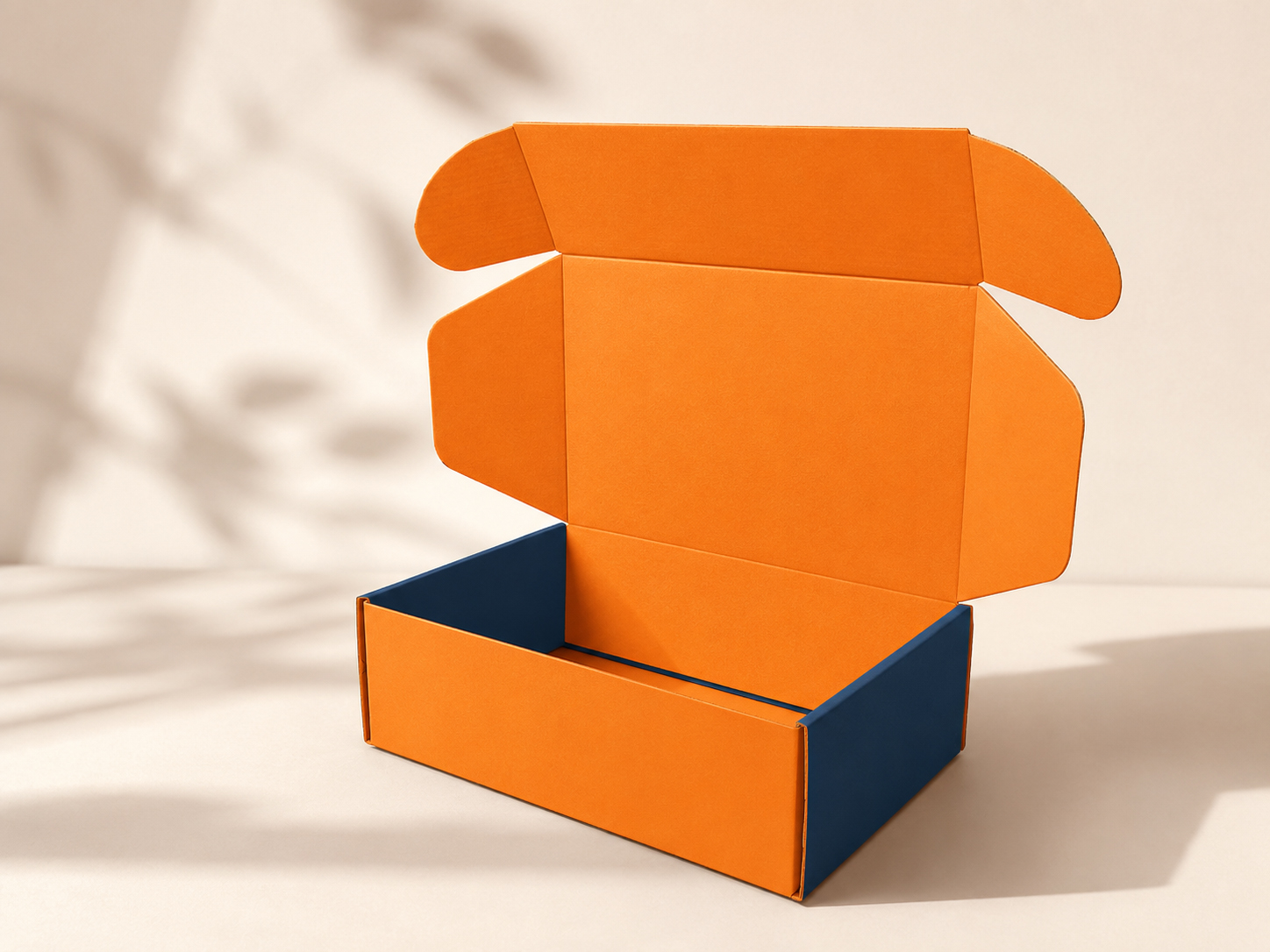
Start with the product’s finished length, width, and height. Include any retail carton, protective sleeve, tissue wrap, or accessory pack that will be placed inside the mailer. These measurements should be used to determine the required interior dimensions, not the exterior box dimensions.
Interior and exterior measurements are not interchangeable. Corrugate thickness, folded walls, locking tabs, and tuck panels take up space within the finished structure. A box described only by its outside size may provide less usable room than expected.
For multi-product sets, arrange the items exactly as they will be packed before calculating the custom size. Consider whether the products will sit side by side, stack vertically, or require separation. When the fit is tight or the product has an unusual shape, a blank sample box is more reliable than approving the structure from measurements alone.
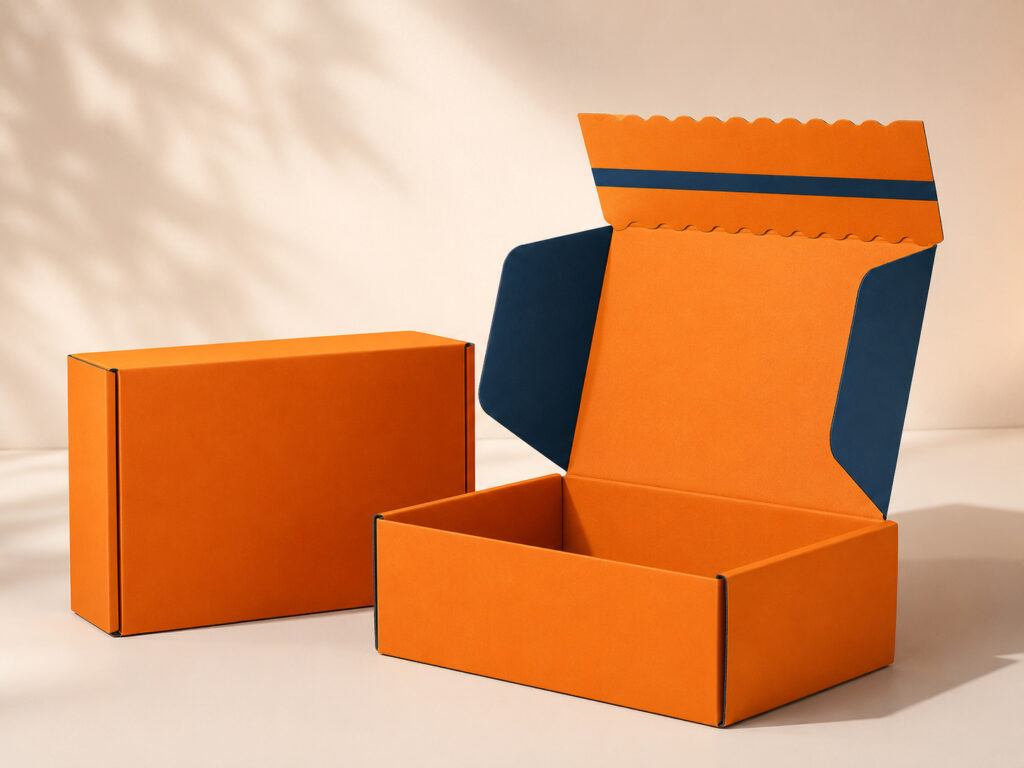
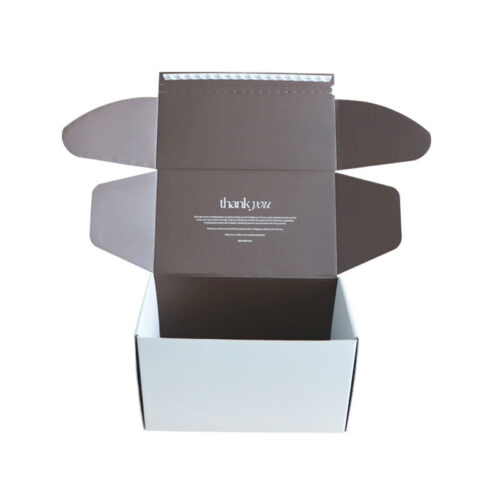
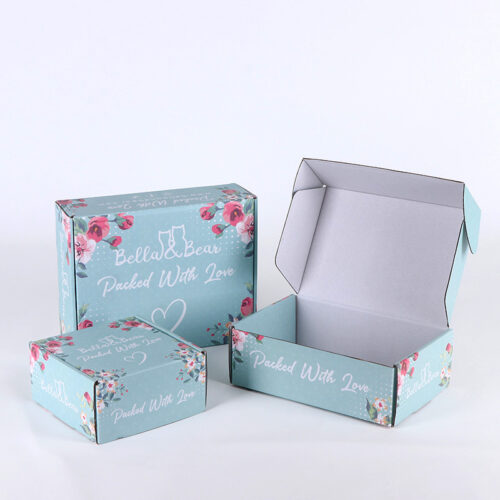
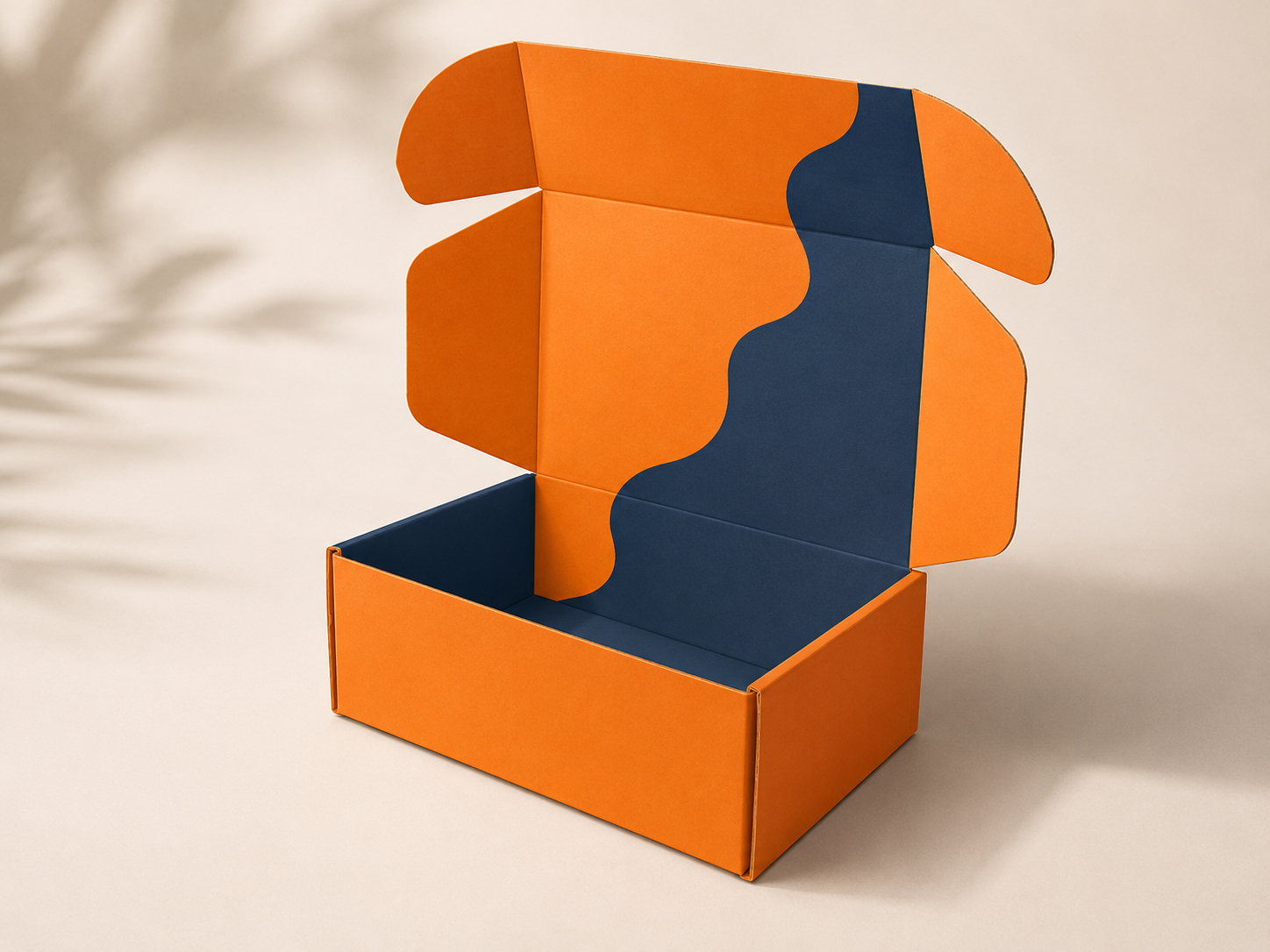
Mailer box printing can be applied to the exterior, interior, or selected panels, depending on the structure and the supplier’s production capabilities. Buyers may choose a restrained logo layout, full-panel graphics, shipping instructions, campaign messaging, or an interior design that becomes visible when the box is opened.
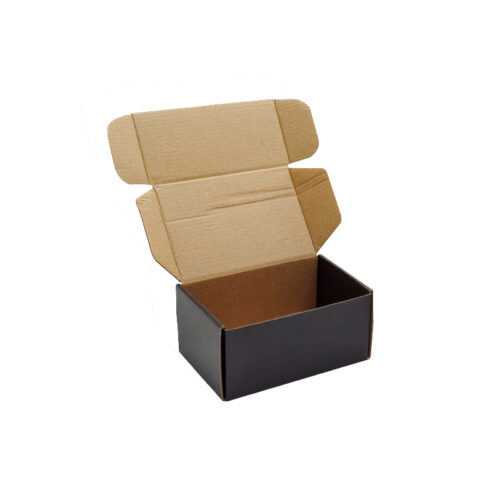
The corrugate surface affects how the final design appears. Natural kraft has a brown base that can influence lighter ink colors, while white corrugated provides a brighter background for many custom printed designs. Large solid areas, small text, gradients, and exact brand colors should be reviewed with the supplier before artwork approval.
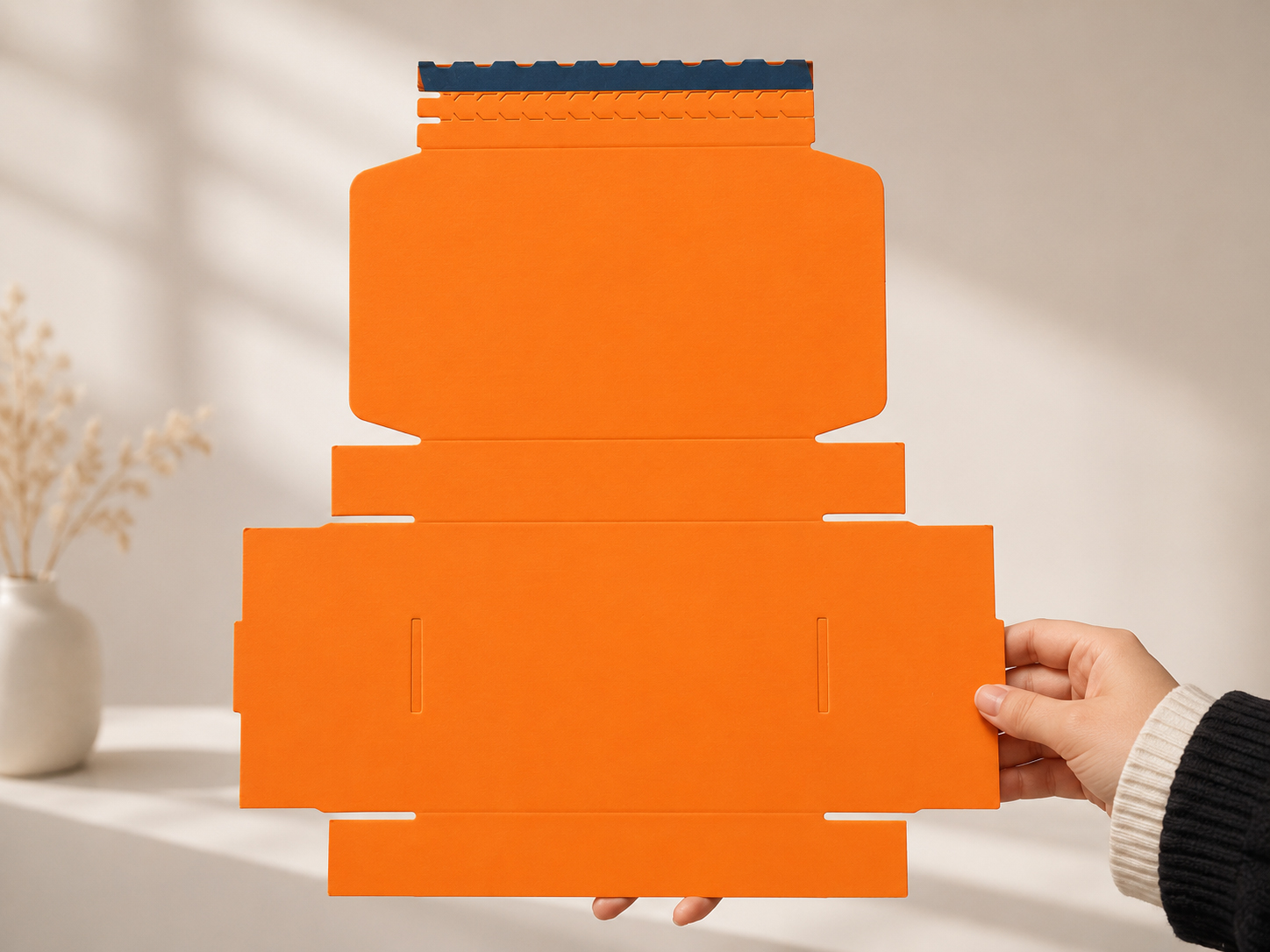
Artwork should normally be positioned on an approved dieline template. The dieline identifies cut lines, fold lines, glue areas, locking tabs, and safe zones. Keep logos, barcodes, and important text away from folds and trimmed edges. Before you upload your artwork, confirm the required file format, bleed allowance, color mode, image resolution, and font settings.
A digital proof helps verify text, placement, and general layout. A physical printed sample may be more appropriate when print quality, color appearance, material texture, or panel alignment is commercially important.