Custom Printing, Kraft Materials, and Finishes for Premium Packaging
Material choice changes the character of packaging before any artwork is printed. Smooth wrapped paper supports crisp custom printed graphics, textured stock adds a tactile layer, and kraft creates a more natural visual language. Kraft paper can work especially well for an eco-friendly direction, while coated papers better support sharp color and refined decorative finishes.
Natural kraft does not behave exactly like a bright white coated sheet, so color expectations should be discussed early. A kraft wrap can look intentionally understated, while kraft boxes suit brands that want minimal graphics and tactile materials. The same planning applies to UV effects: a full UV coating changes surface gloss, while spot UV is more selective.
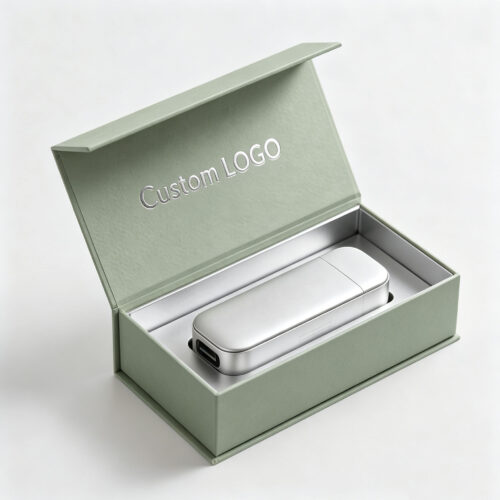
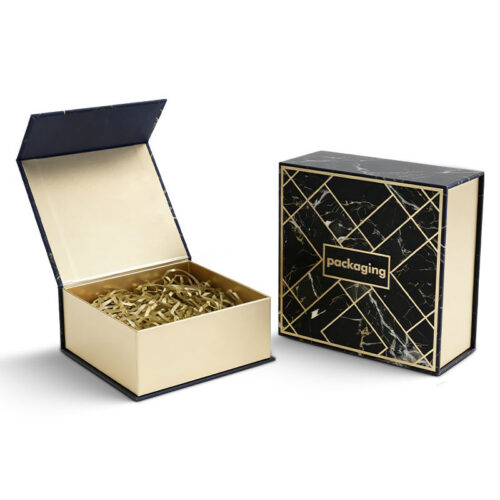
CMYK, emboss, and foil stamping should be reviewed as one visual system rather than separate add-ons. The right printing technique depends on paper texture, artwork detail, color expectations, and the way the finished package will be handled. In many cases, one carefully chosen finish gives a stronger high-end result than several decorative effects competing for attention.
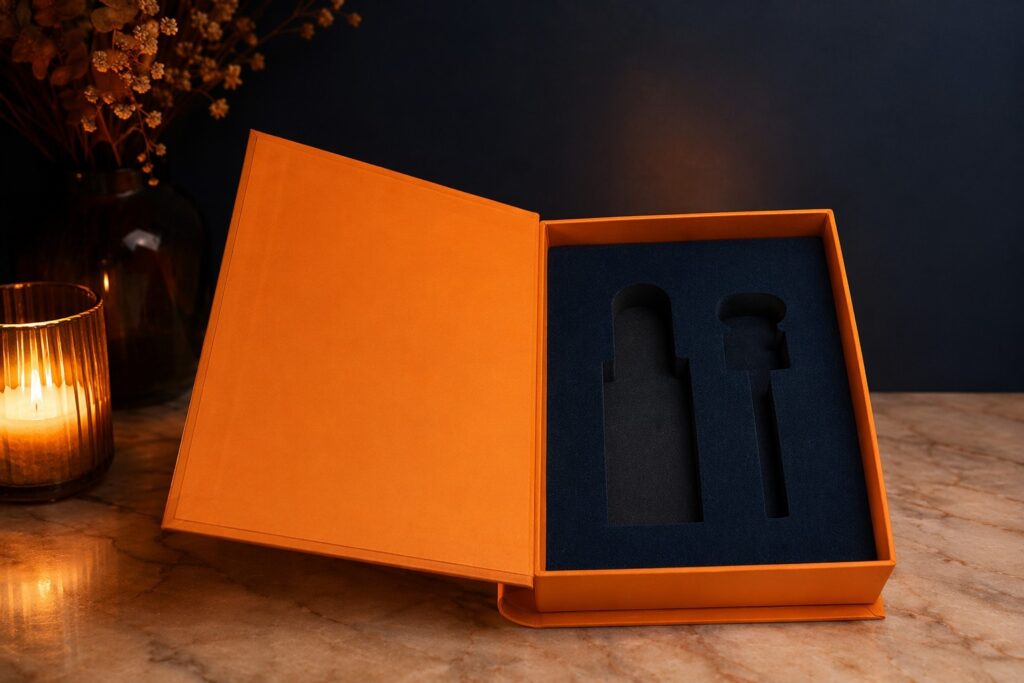
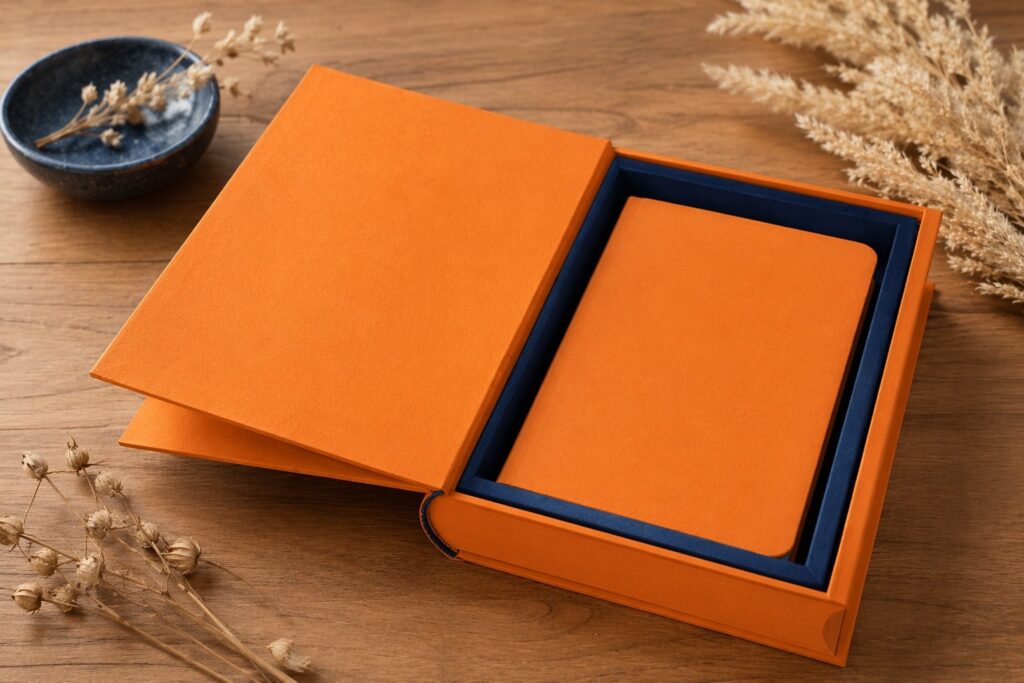
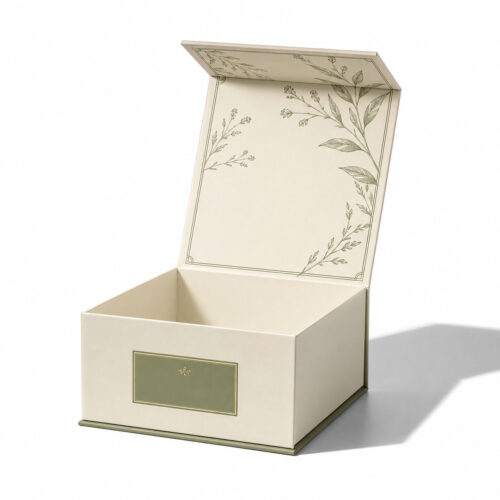
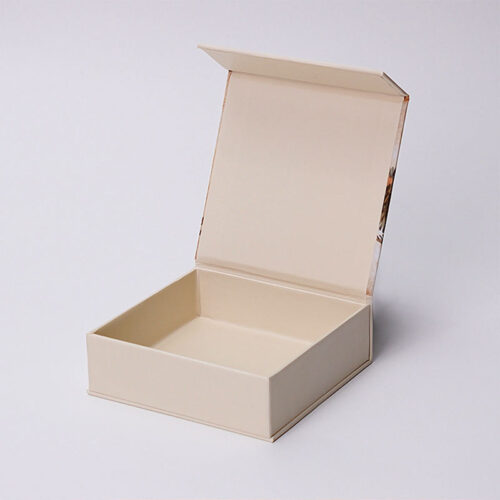
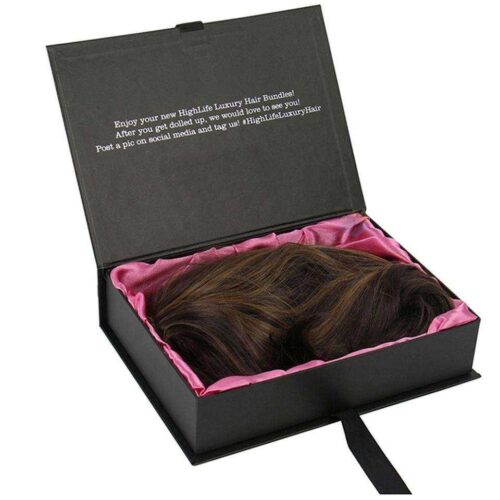
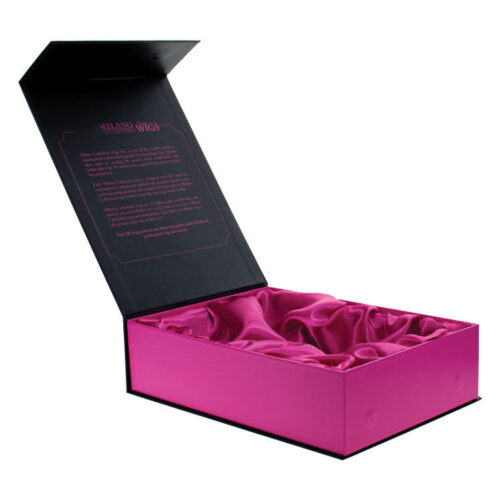
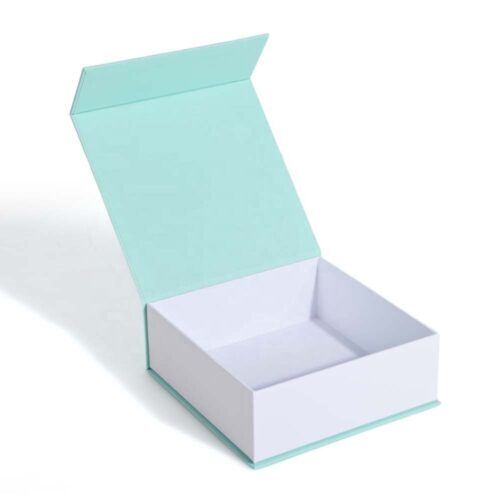
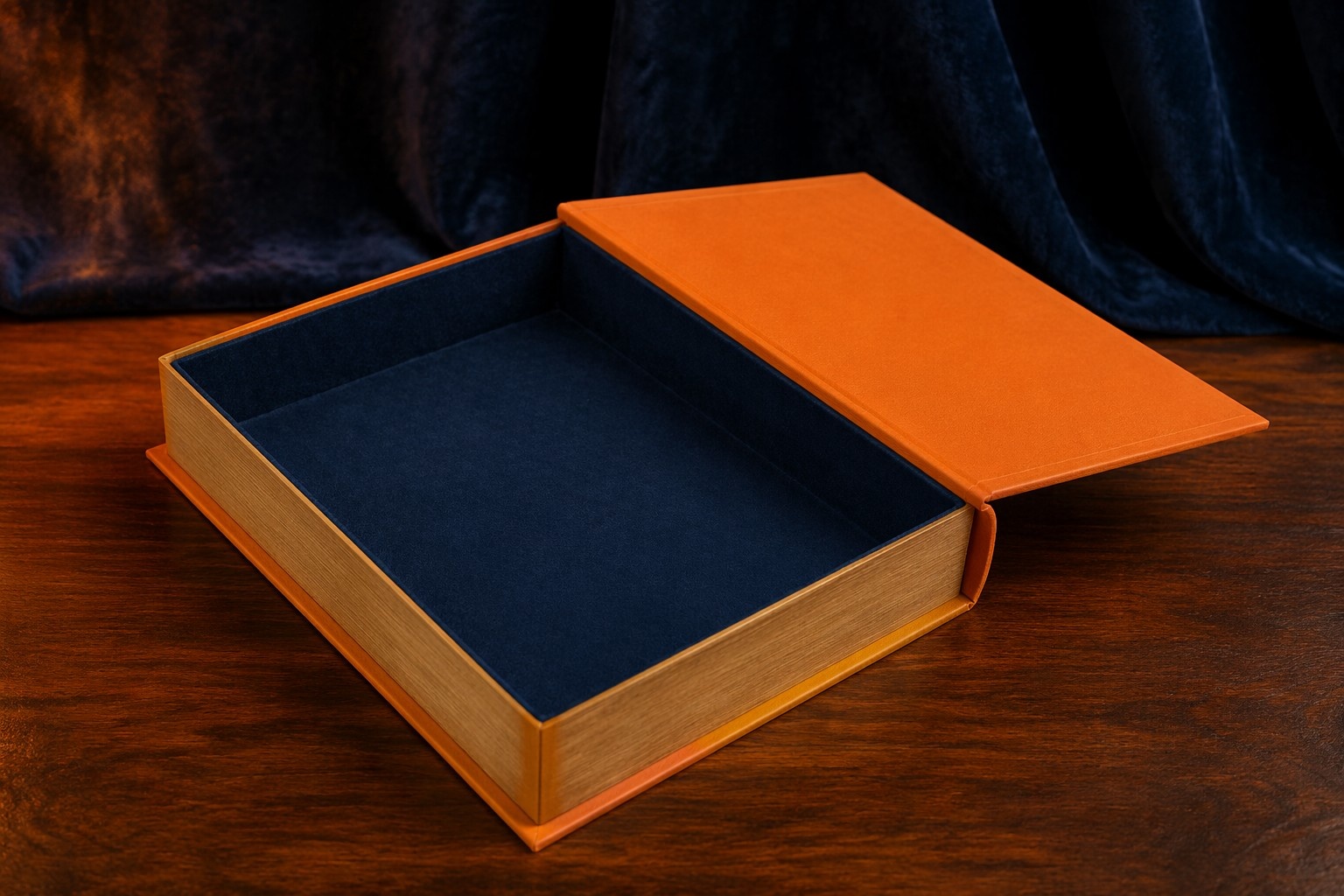
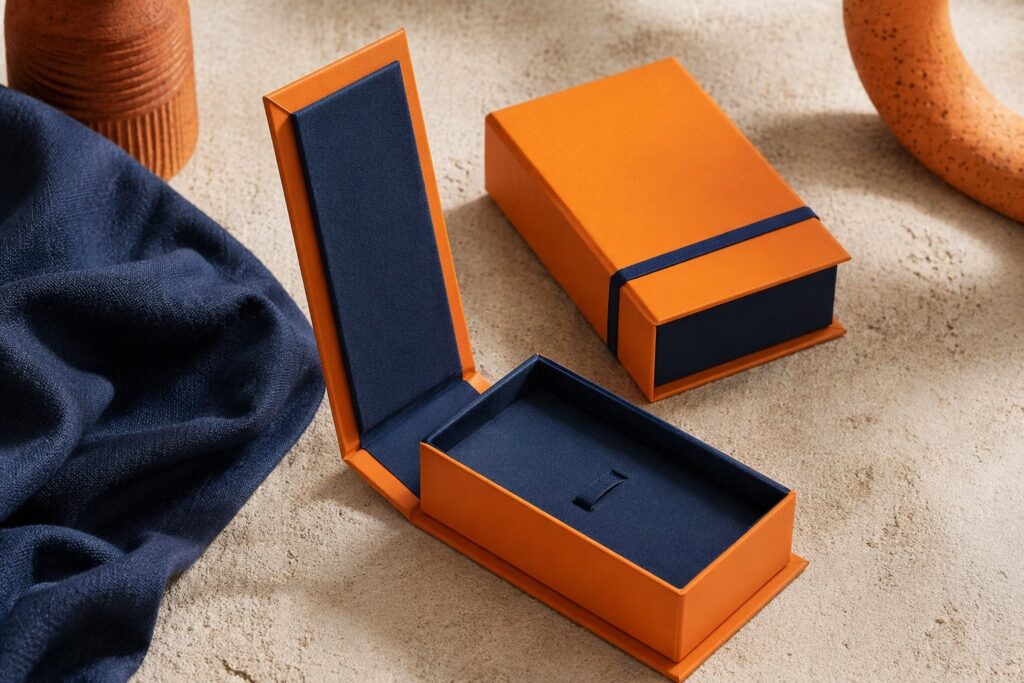
We also consider how the material wraps around edges, corners, and the spine. A book-style rigid box must open repeatedly without making the hinge area look careless. The outer wrap, rigid stock, adhesive control, and cover alignment all affect the result.
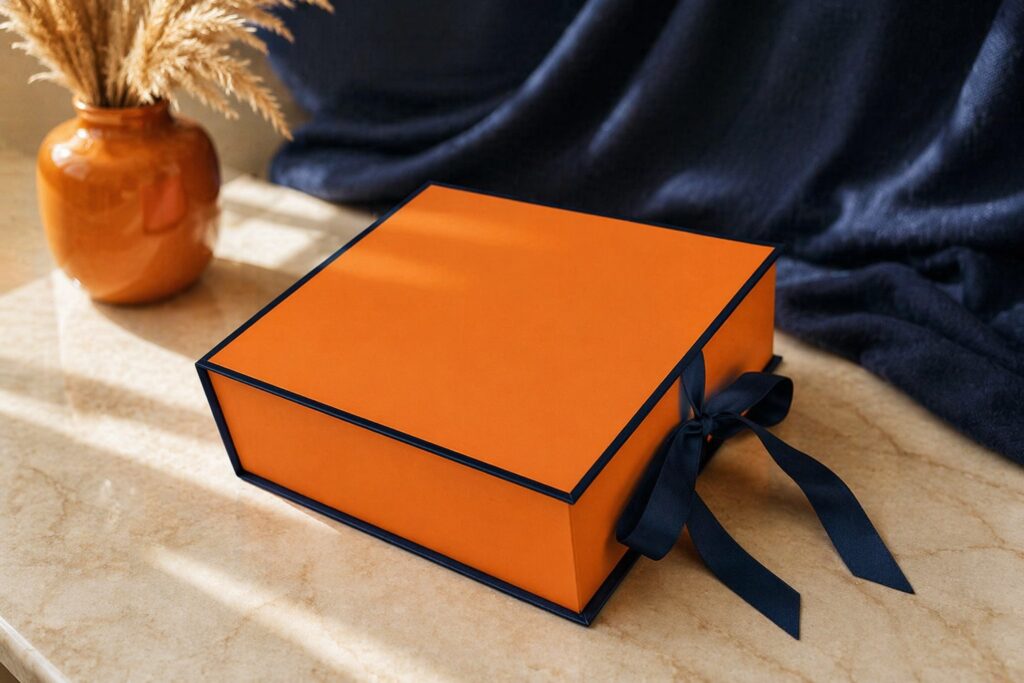
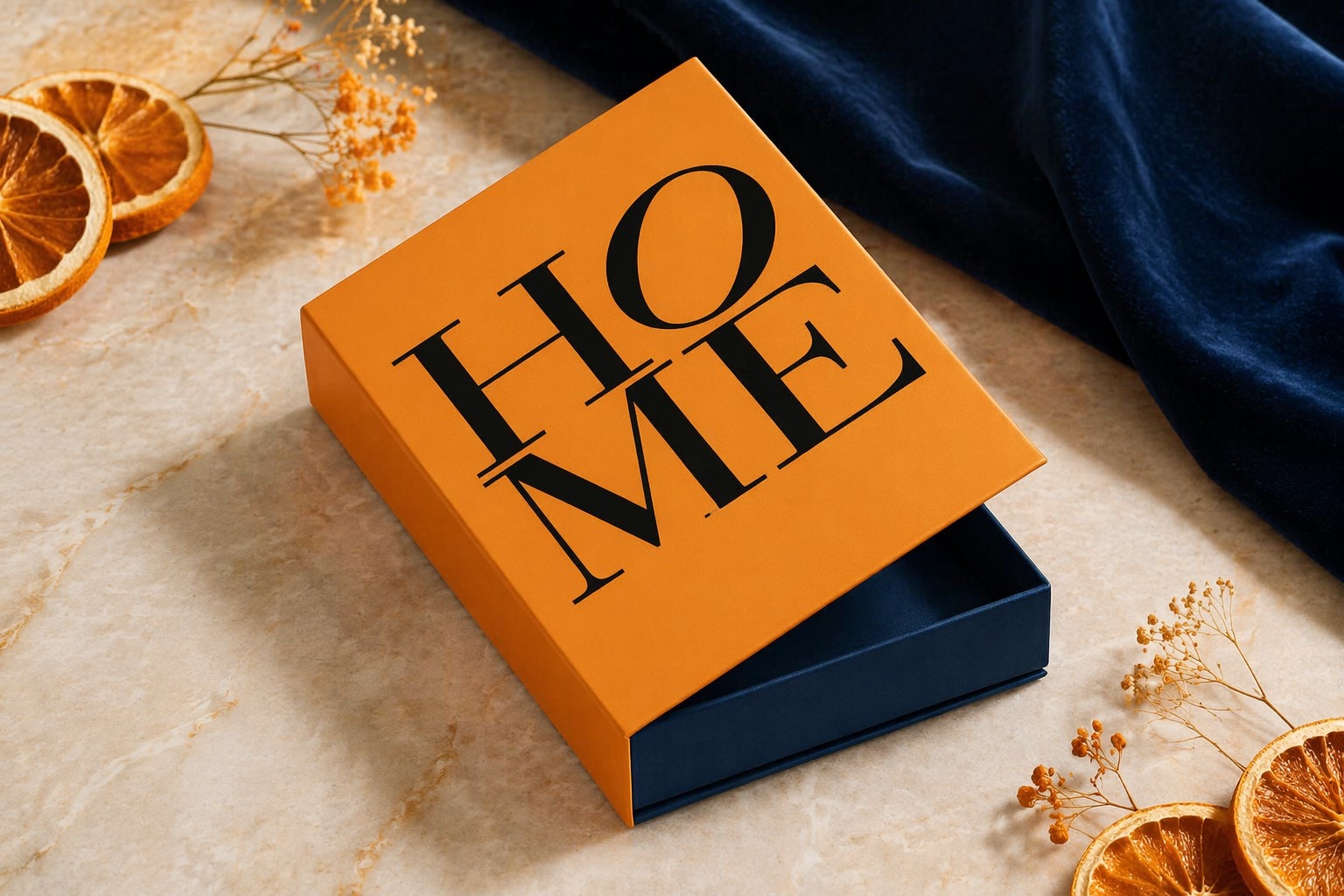
Whether the project uses a custom printed book layout, custom printed book style graphics, or printed book style rigid boxes with minimal exterior branding, the specification should reflect how the product will be displayed, packed, and shipped. A luxury book presentation may depend on subtle texture, while a premium book package may need stronger visual contrast for retail or online campaigns.
Reliable Custom Packaging Production for Wholesale Orders
A good sample is only useful when the production run can match it. For wholesale buyers, repeatability matters across board cutting, wrapping, printing, assembly, magnetic closure alignment, and insert placement. A high-quality finished box should not look excellent only in one photograph; construction needs to remain consistent across the order.
Before production, we review product dimensions, opening direction, cover fit, artwork, insert structure, and other customization options. This step is especially important for custom rigid projects where a small dimension error can affect both presentation and assembly. It also helps reduce late changes after printing plates, dies, or other tooling have been prepared.
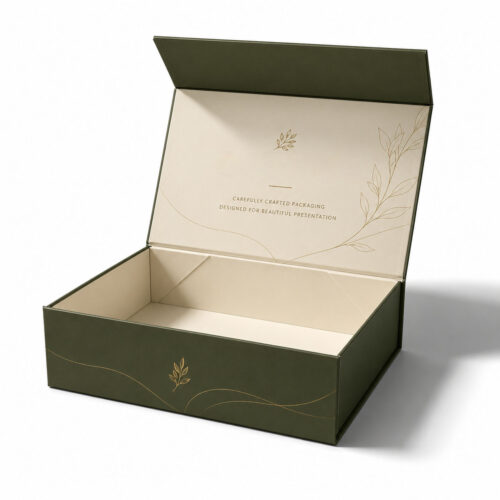
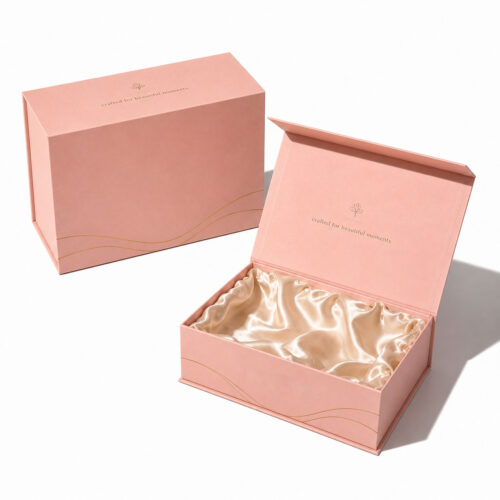
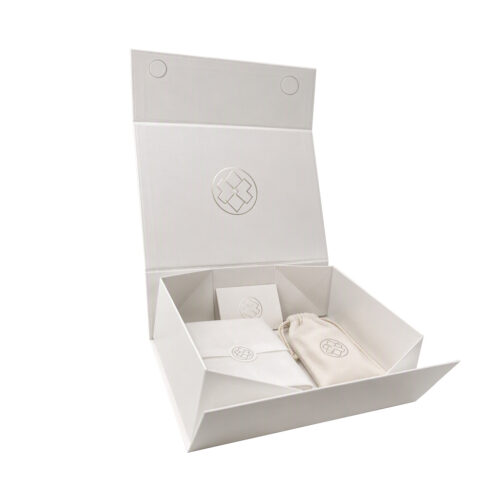
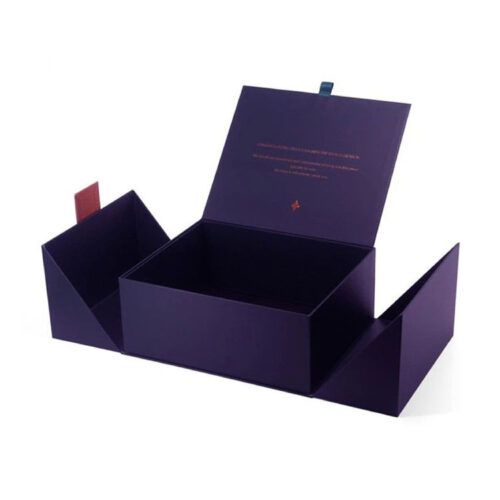
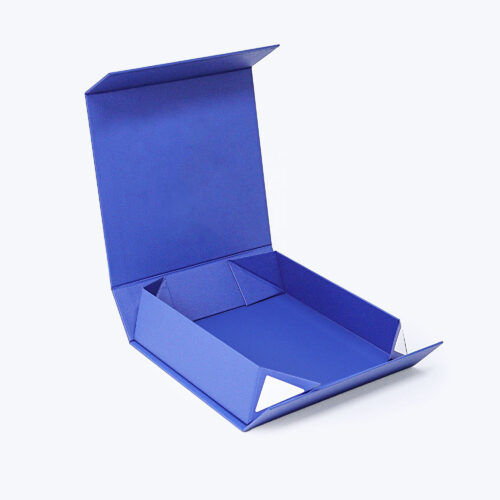
Different structures solve different business problems. Traditional setup boxes provide a ready-made rigid form, while a collapsible design can help reduce storage volume in suitable projects. A book shaped rigid format, shoulder neck rigid boxes, rigid gift packaging, and luxury rigid boxes each create a different opening experience.
We help buyers compare these structures with book boxes, custom boxes, and other rigid packaging boxes so the final packaging solution matches the product rather than appearance alone. Some projects need stronger internal support. Others benefit from a magnetic closure, a simpler opening method, or a more efficient packing process.
Our wholesale process is built around clear specifications and practical production decisions. Whether you need custom book style boxes for a new launch, custom book-style boxes for a seasonal collection, or custom book-style rigid boxes for an established range, the objective is consistent packaging that protects the product and represents the brand correctly.