Bevor Sie gehen, lassen Sie Ihr Projekt für starre Schachteln von unserem Managementteam prüfen. Teilen Sie uns Ihre Produktart, die für Ihren Zielmarkt vorgesehene Stückzahl und den Zeitplan für die Markteinführung mit – wir helfen Ihnen gerne dabei, die für Ihre Marke am besten geeignete Struktur, das Material, die Oberflächenveredelung, die Mindestbestellmenge und den Produktionsplan zu ermitteln.
Unterstützung in den Bereichen Vertrieb und Verpackungstechnik erhalten
Unser Vertriebsteam
Benötigen Sie Hilfe bei Schachteln mit Magnetverschluss, Schachteln mit abnehmbarem Deckel, Schubladenschachteln, Kosmetikschachteln, Kerzenschachteln, Parfümverpackungen, Teeschachteln, Weinschachteln oder Werbeverpackungen? Senden Sie uns Ihre Anforderungen, und unser Vertriebs- oder Entwicklungsteam hilft Ihnen gerne bei der Preisgestaltung, der Konstruktion, der Mustererstellung, dem Druck und der Produktionsdurchführbarkeit.
Individuell gestaltete Kerzenverpackungen in Großmengen | Kerzenverpackungen im Großhandel
Das schmutzige Geheimnis hinter den meisten Großverpackungen für Kerzen
Ich habe schon Kerzenboxen gesehen, die auf dem Foto des Lieferanten wunderschön aussahen, in der tatsächlichen Lieferung aber absolut miserabel waren.
Hübsche Verpackung. Schlechte technische Daten.
Und genau das ist der Punkt, den niemand gerne laut ausspricht: Viele maßgefertigte Kerzenverpackungen scheitern nicht, weil es der Fabrik an Fachkompetenz mangelt, nicht, weil der Kartonmarkt unüberschaubar ist, und nicht, weil “die Speditionen derzeit unsanft mit der Ware umgehen”, sondern weil der Käufer Dekoration vor Stabilität, das Design vor der Passgenauigkeit zum Glas und ein günstiges Angebot verlangte, bevor überhaupt das Gewicht der gefüllten Kerze ermittelt wurde.
Inhaltsverzeichnis
Willst du die hässliche Version? Na gut.
Eine Kerze ist kein Stück Seife. Sie ist dicht, zerbrechlich, temperaturempfindlich und befindet sich oft in einem Glasbehälter. Das Glas hat eine Schulter. Der Deckel sorgt für zusätzliche Höhe. Das Etikett kann verkratzen. Das Wachs kann schwitzen. Die Einlage drückt möglicherweise zu fest gegen den Rand. Dann versendet jemand das Ganze über ein Paketnetzwerk, das “zerbrechlich” eher als höfliche Empfehlung betrachtet.
Also, ja, maßgefertigte Kerzenverpackungen in Großmengen können Geld sparen. Sie können aber auch eine schlechte Entscheidung um 5.000 Stück vervielfachen.
Das ist die Gefahr.
Individuell gestaltete Kerzenverpackungen in Großmengen Großhandel für Kerzenverpackungen
Warum es bei der Verpackung von Kerzen im Großhandel nicht mehr nur um “Branding” geht”
Aber hören wir doch auf, so zu tun, als ginge es hier nur um Goldfolie und schöne Schriftarten.
Die Verpackung von Kerzen für den Großhandel befindet sich derzeit an der unübersichtlichen Schnittstelle zwischen Schadensquoten im E-Commerce, Kundenbewertungen, Sicherheitskennzeichnungen, Nachhaltigkeitsversprechen und ganz einfacher Beschaffungsmathematik. Wenn das dramatisch klingt, schauen Sie sich doch einmal an, in welche Richtung sich der Einzelhandel bereits entwickelt hat. Reuters berichtete, dass die Ausgaben im US-Onlinehandel von Januar bis April 2024 um etwa 7% gestiegen sind und $331,6 Milliarden erreichten.. Mehr Online-Bestellungen bedeuten mehr Ablagen auf dem Förderband, mehr Abwicklung auf der letzten Meile, mehr Hitze auf der Veranda, mehr Rücksendungen und mehr Kunden, die das Auspacken filmen, wenn etwas beschädigt ankommt.
Das verändert die Funktion der Box.
Ein Verkaufsregalkarton kann leise flüstern. Eine Kerzenverpackung für den Online-Handel muss einiges aushalten.
Und dann ist da noch das Thema Sicherheit. Niemand im Verpackungsvertrieb spricht gerne darüber, aber Kerzenmarken bewegen sich – ob es ihnen gefällt oder nicht – in einem Bereich mit hoher Brandgefahr. Im August 2024 gab die US-amerikanische Verbraucherschutzbehörde (Consumer Product Safety Commission) bekannt, dass eine Rückruf der Duftkerze „Mango-Mandarine“ von Trader Joe’s nach Berichten über unerwartet hohe Flammen. Rund 653.000 Geräte waren davon betroffen. Diese Zahl geht mir nicht aus dem Kopf.
Nicht, weil die Schachtel die Ursache war.
Denn wenn ein Kerzenprodukt in eine Sicherheitsdiskussion hineingezogen wird, erscheint plötzlich alles, was rund um das Produkt sichtbar ist, wichtig: Warnhinweise, Chargennummer, Beilage, Gebrauchsanweisung, die Platzierung des Barcodes – ja sogar die Frage, ob die Verpackung den Eindruck vermittelt, von einer seriösen Marke zu stammen oder eher von einem Wochenend-Experiment auf Etsy.
Kleine Dinge altern unter Druck schnell.
Die Daten der National Fire Protection Association zu Bränden durch Kerzen Laut dem Bericht waren Kerzen im Berichtszeitraum die Brandursache für 2% der gemeldeten Wohnungsbrände und 5% der bei Wohnungsbränden verursachten Verletzungen. Das ist kein Grund, Kunden Angst einzujagen. Es ist vielmehr ein Grund, den Text auf der Verpackung und den Platz auf dem Etikett wie eine Unternehmensversicherung zu behandeln.
Die Box hat vier Aufgaben. Gut auszusehen ist nur eine davon.
Eine gute Kerzenverpackung schützt. Sie fördert den Verkauf. Sie sorgt für Ordnung im Lagerbestand. Sie vermittelt Sicherheitshinweise, ohne dass der Kunde das Gefühl hat, er hätte ein Warnaufkleber mit Wachs darin gekauft.
Das ist schwieriger, als es klingt.
Hier liegt der Fehler vieler Marken: Sie geben einen Entwurf frei, weil der Deckel edel aussieht, und stellen später fest, dass das Glas klappert, der Einsatz zu flach ist, sich die Kartonwände wölben oder die Soft-Touch-Folie Fingerabdrücke wie ein Tatort anzieht. Ich bin ehrlich gesagt der Meinung, dass 60% der “Luxus-Kerzenverpackungen” nichts anderes sind als gewöhnliche Schachteln mit teurem Make-up.
Vielleicht sogar noch mehr.
Fang mit der Physik der Gläser an, nicht mit Moodboards
Bevor man sich mit dem Design, der Prägung oder der Frage “Können wir das noch hochwertiger gestalten?” beschäftigt – messen Sie die Kerze erst einmal genau aus.
Füllgewicht. Durchmesser des Glases. Höhe des Deckels. Form der Schulter. Dicke des Etiketts. Wärmeempfindlichkeit. Ausrichtung im Verkaufsregal. Versandart. Verpackungsgeschwindigkeit. Einfach alles.
Wenn die Schachtel für einzelne Kerzengläser bestimmt ist, muss die Einlage das Produkt so halten, dass keine Druckstellen entstehen. Ist sie für ein Geschenkset vorgesehen, muss der Einsatz verhindern, dass die Kerzen miteinander in Berührung kommen. Ist sie für den Online-Versand bestimmt, muss die Außenverpackung Stapelbelastung, seitlichem Druck und den kleinen Stößen standhalten, die bei der Lagerabfertigung den ganzen Tag über auftreten.
Der Karton interessiert sich nicht für Ihre Markengeschichte.
Hier kommt es auf Millimeter an.
Bei handgefertigten Kerzen oder Kerzen, die in erster Linie im Einzelhandel verkauft werden, kann ein Sichtfenster sinnvoll sein, da die Käufer das Glas, die Wachsfarbe, das Etikett oder die dekorative Oberfläche sehen möchten. Eine Konstruktion wie diese Bedruckte Geschenkverpackung mit Sichtfenster für handgefertigte Produkte dient als Anhaltspunkt: Sichtbarkeit ist hilfreich, doch das Fenster darf nicht zu einer Schwachstelle werden, die den gesamten Karton zu einem Ausstellungsobjekt ohne Stabilität macht.
Individuell gestaltete Kerzenverpackungen in Großmengen Großhandel für Kerzenverpackungen
In den Einblendungen kommt die Wahrheit zum Vorschein
Ich schaue mir immer zuerst die Beilage an, bevor ich den Druck bewerte.
Denn durch Einfügungen wird die „Lazy Packaging“-Methode schnell sichtbar.
Bei einer Kerzenverpackung mit Einlagen sollte die Bewegung je nach Glasform am Boden, am Korpus, am Deckel oder an der Schulter kontrolliert werden. Ist die Passform zu locker, hört der Kunde, wie das Glas in der Verpackung herumklappert. Ist sie zu eng, hat der Verpacker den ganzen Tag mit der Verpackung zu kämpfen. Ist sie zu rau, wird das Etikett zerkratzt, noch bevor der Kunde die Verpackung überhaupt öffnet.
Eine schlecht sitzende Einlage lässt eine teure Verpackung billig wirken.
Die gängigen Auswahlmöglichkeiten für Einsätze sind zwar langweilig, aber dennoch wichtig:
Karton-Einlagen für den Einzelhandel und Feuerzeugdosen
Wellpappeneinsätze als Versandstütze
Formpapier – wenn eine Marke weniger Kunststoff in der Verpackung verwenden möchte
EVA-Schaumstoff für hochwertige Präsentationen, auch wenn das Recycling dabei etwas mühsamer wird
PET- oder Papierfenstersysteme, wenn die Sichtbarkeit ein Verkaufsargument ist
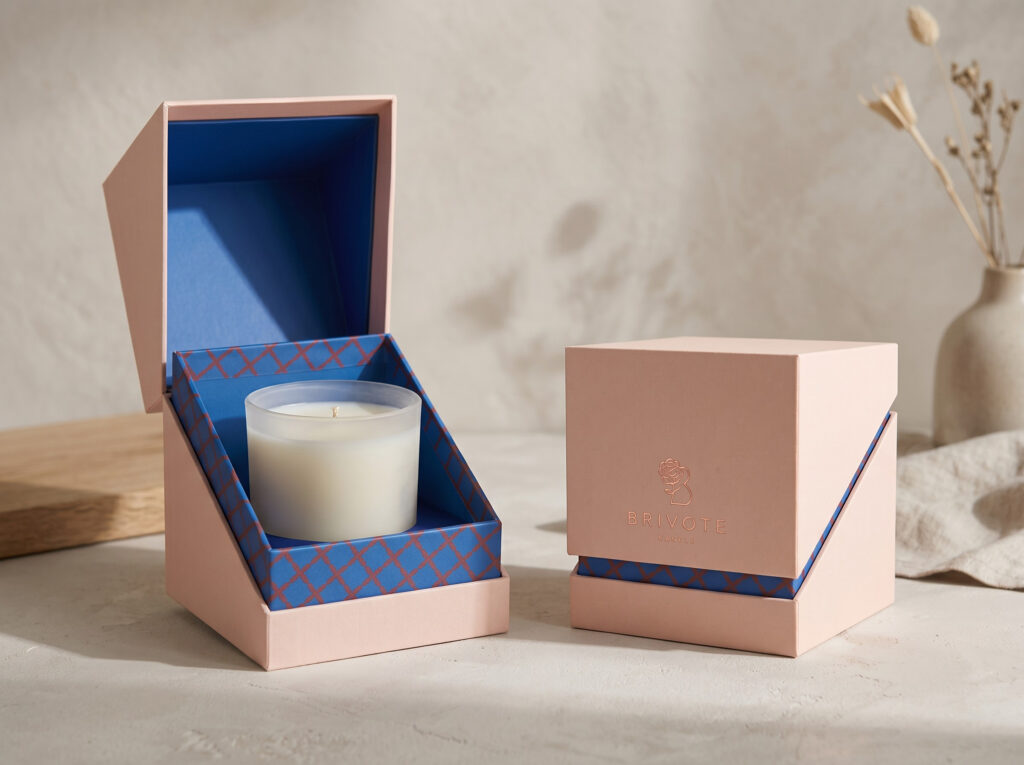
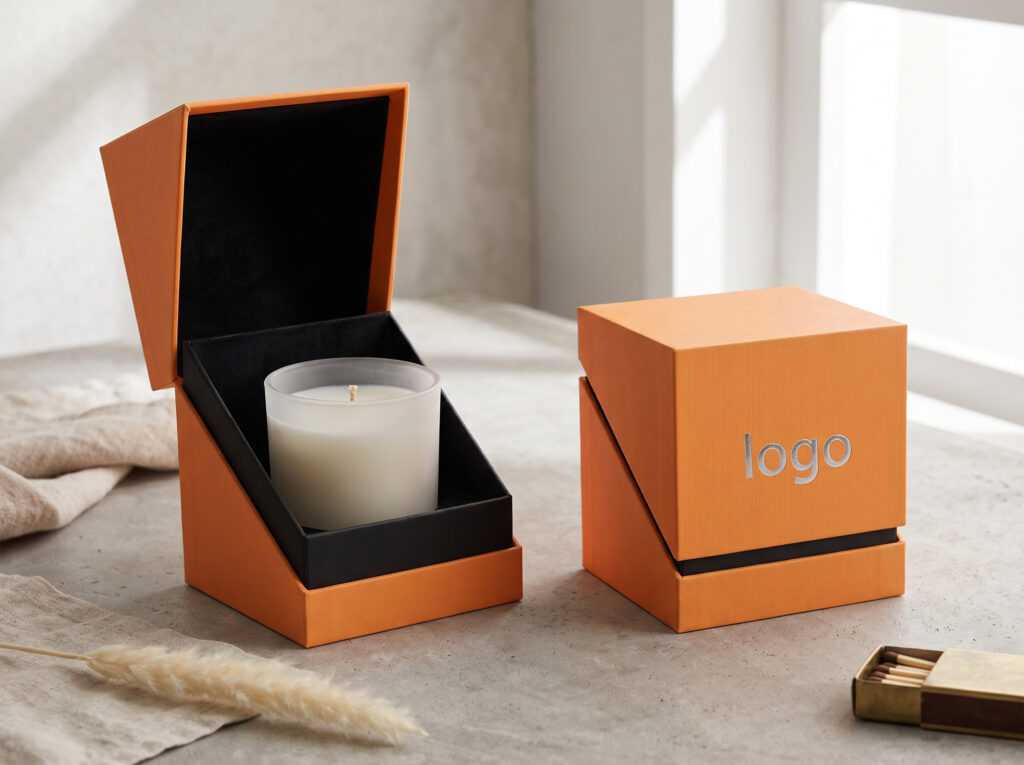
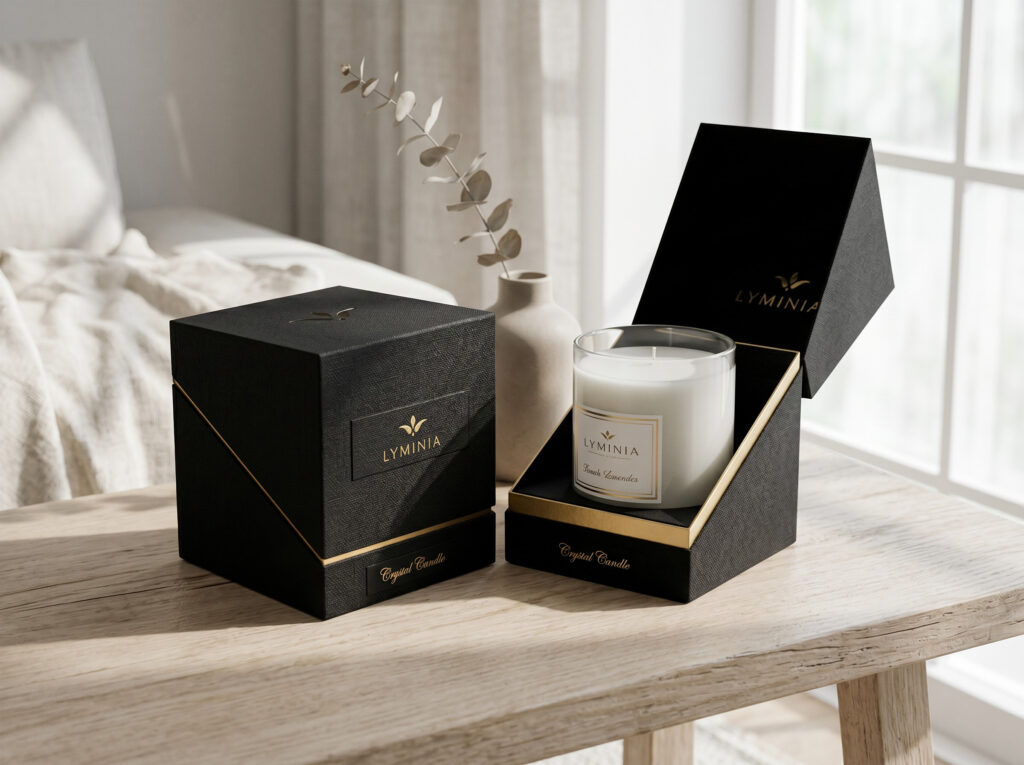
Bei saisonalen Kerzen, PR-Paketen und Geschenksets können feste Verpackungen die Kosten rechtfertigen. A Zweiteilige, bedruckte Deckelkonstruktion für saisonale Geschenkverpackungen zeigt, wie eine sich langsam öffnende Verpackung wirkt, die dann zum Einsatz kommt, wenn die Verpackung nicht nur funktional sein soll, sondern auch den Eindruck eines Geschenks vermitteln soll.
Man sollte jedoch „stabil“ nicht automatisch mit „schützend“ gleichsetzen. Auch eine stabile Schachtel benötigt den richtigen Abstand. Sie benötigt nach wie vor eine Einlage. Und sie benötigt eine Kartonverpackung, die verhindert, dass die Ecken in den Umkartons zerdrückt werden.
„Rigid“ ist eine Struktur. Keine Zauberei.
Großbestellungen: Wenn eine fehlerhafte Schnittlinie zu einem finanziellen Problem wird
Kerzenkartons in Großpackungen sind pro Stück günstiger. Das liegt auf der Hand.
Das ist der Köder.
Die eigentliche Frage ist, ob der niedrigere Stückpreis auch nach Beschädigungen, Lagerung, Frachtraum, Arbeitsaufwand und Nachbesserungen noch Bestand hat. Ich habe schon erlebt, dass Käufer sich über ein paar Cent Ersparnis bei den Kartonkosten gefreut haben, diese Ersparnis dann aber dafür ausgeben mussten, Reklamationen zu beheben, kaputte Kerzen zu ersetzen oder zu erklären, warum der “Premium”-Karton mit weißen, rissigen Ecken angekommen ist.
Deshalb hasse ich Quellenangaben, die nur aus Zitaten bestehen.
Verpackungsoption
Optimaler Anwendungsfall
Größte Stärke
Verstecktes Risiko
Meine Meinung
Kerzenverpackung aus Faltschachtel
Leichte Kerzen für den Einzelhandel
Niedrigere Stückkosten, schnelle Produktion
Unzureichender Schutz für Gläser
Nur mit passendem Einsatz oder Versandbehälter geeignet
Stabile Kerzenverpackung
Luxuriöse Verpackungsboxen für Kerzen
Überzeugende Präsentation, bessere Struktur
Höheres Fracht- und Lagervolumen
Ideal für hochwertige Geschenkkerzen
Wellpapp-Versandtasche mit Beilage
Versand von Kerzen im E-Commerce
Sturzfestigkeit, praktischer Schutz
Weniger “Boutique”-Flair
Smart für DTC-Marken
Kerzenbox für das Fenster
Handgefertigte Produkte und Verkaufsauslage
Produktsichtbarkeit
Fensterfolien können sich auf Recyclingangaben auswirken
Gut, wenn die Materialauswahl dokumentiert ist
Geschenkbox mit mehreren Kerzen
Geschenksets, Feiertage, Firmengeschenke
Höherer Bestellwert
Die Einstecktoleranz muss exakt sein
Lukrativ, aber leicht zu vermasseln
Die Tabelle sieht einfach aus. Das ist sie aber nicht.
Ein Faltkarton mag für eine leichte Kerze in einer Blechdose, die in die Regale des Einzelhandels gelangt, durchaus geeignet sein. Steckt man jedoch ein schweres Glasgefäß in dieselbe Verpackung und versendet es direkt an den Verbraucher, geht man ein Risiko ein. Eine stabile zweiteilige Schachtel mag zwar hochwertig wirken, benötigt aber mehr Lagerplatz. Eine Geschenkbox für mehrere Kerzen kann zwar den durchschnittlichen Bestellwert steigern, doch schon eine einzige schlecht sitzende Einlage verwandelt das Set in ein Schlaginstrument.
Stell bessere Fragen.
Wie viel wiegt die gefüllte Kerze? Wie hoch ist das Sturzrisiko? Wie viele Stück sind im Innenkarton? Wird das Produkt in einen Einzelhandelsversandkarton oder einen Paketversandkarton verpackt? Werden die Kartons flach verpackt oder bereits zusammengebaut? Wie viele Sekunden dauert das Verpacken pro Einheit?
Das Letzte wird unterschätzt. Und zwar sehr.
Individuell gestaltete Kerzenverpackungen in Großmengen Großhandel für Kerzenverpackungen
Nachhaltigkeitsaussagen: Der Aspekt, den Marketingteams immer wieder unterschätzen
“Umweltfreundlich” – das ist der Ausrede, hinter der sich schwache Werbetexte für Verpackungen verstecken.
Ich schenke dieser Aussage keinen Glauben, solange niemand konkrete Daten vorlegen kann. Die US-amerikanische Federal Trade Commission (FTC) Grüne Ratgeber Es gibt sie, weil Umweltaussagen Kunden irreführen können, wenn sie zu allgemein, zu vage oder nicht durch Belege untermauert sind. Wenn also eine Kerzenmarke von “nachhaltiger Verpackung” spricht, möchte ich wissen, was das konkret bedeutet.
FSC-zertifiziertes Papier? Recyclingkarton? Kein Kunststofflaminat? Einlage aus Formzellstoff? Beschichtung auf Wasserbasis? Struktur aus einem einzigen Material? Geringeres Verpackungsgewicht? Nachgewiesene Produktkette?
Wähle eine aus. Beweise es.
Und wenn Sie nach Europa verkaufen, wird der Druck immer größer. Die Europäische Kommission erklärt, dass die Verordnung über Verpackungen und Verpackungsabfälle, Die Verordnung (EU) 2025/40 trat am 11. Februar 2025 in Kraft und gilt grundsätzlich ab dem 12. August 2026. Das ist von Bedeutung, wenn Ihre Kerzenverpackungen Kunststofffenster, laminiertes Papier, Schaumstoffeinlagen, Magnete, Bänder, gemischte Materialien oder sonstige Elemente enthalten, die die Einhaltung von Recycling-Angaben erschweren.
Auch Kalifornien bleibt nicht untätig. Im Rahmen von Das EPR-Programm für Verpackungen gemäß SB 54 von CalRecycle, werden Hersteller in ein System gedrängt, in dem die Verantwortung für Verpackungen auch nach dem Verkauf weiterbesteht. Das bedeutet: Die Wahl der Verpackungen wird zunehmend zu einem Bestandteil der Compliance-Planung und ist nicht mehr nur eine Frage des Einkaufs.
Ich bin also folgender Meinung: Wenn ein Lieferant das Papier, die Beschichtung, das Einlegematerial und die Angaben zur Recyclingfähigkeit nicht in verständlicher Sprache erklären kann, möchte ich von diesem Lieferanten nicht das günstigste Angebot erhalten.
Ich möchte einen anderen Lieferanten.
Für Marken, die in verschiedenen Kategorien tätig sind – Kerzen, Kosmetik, Geschenkverpackungen, Raumdüfte, handgefertigte Produkte – ist dies Maßgeschneiderte Verpackungen nach Branchenkategorien ist ein praktischer Ausgangspunkt, da Kerzenverpackungen selten für sich allein stehen. Sie überschneiden sich mit Geschenkboxen, stabilen Schachteln im Kosmetikstil, Verkaufsdisplays und Schutzverpackungen für den Online-Handel.
So bestellen Sie maßgeschneiderte Kerzenverpackungen in großen Mengen, ohne es später zu bereuen
Fang hässlich an.
Nicht mit Farben. Nicht mit Folie. Nicht mit “Luxus”. Beginnen Sie mit dem Produkt, das auf dem Tisch liegt.
Schritt 1: Erstellen Sie zunächst die Kerzen-Spezifikation
Geben Sie der Fabrik echte Daten ein:
Durchmesser des Glases
Höhe des Glases
Gewicht der gefüllten Kerze
Material und Höhe des Deckels
Etikettendicke und Etikettenposition
Wachsart
Empfindlichkeit gegenüber Duftölen
Einzelne Kerze oder Geschenkset
Einzelhandel, Großhandel, Amazon, Boutique oder DTC-Vertriebskanal
Erwartete Bestellmenge
Zielmarkt: USA, EU, Großbritannien, Kanada oder eine Kombination daraus
“100-ml-Kerzenbox, Premium-Ausführung” ist keine Spezifikation.
Das ist ein Achselzucken.
Schritt 2: Legen Sie die Struktur fest, bevor die grafische Gestaltung das Budget aufzehrt
Genau hier sehe ich, wie Marken Geld verschwenden.
Sie streiten sich über CMYK oder Pantone und stellen dann fest, dass die Konstruktion der Schachtel falsch ist. Sie entscheiden sich für eine Soft-Touch-Laminierung und entdecken dann, dass die Schachtel eine stabilere Einlage benötigt. Sie fügen Folienprägung, Bandagen und Bänder hinzu und beschweren sich dann, dass der Stückpreis gestiegen ist.
Zuerst die Struktur.
Für Kerzen im Einzelhandel können Faltschachteln geeignet sein. Bei Geschenkkerzen können stabile zweiteilige Schachteln oder Schachteln mit Schulter-Hals-Konstruktion sinnvoll sein. Für den Online-Versand von Kerzen sind Versandkartons aus Wellpappe mit Einlagen oft die realistischere Wahl als eine dekorative Faltschachtel, die vorgibt, den Strapazen des Kurierversands standhalten zu können.
Und wenn das Design Produktpräsenz oder interne Unterstützung erfordert, schauen Sie sich an, wie sich Verpackungen mit Einlegern in anderen Produktkategorien bewähren. Dies PET-Faltschachtel mit passgenauem Einsatz Es handelt sich zwar nicht um eine Kerzenverpackung, aber die Erkenntnis in Bezug auf die Verpackung ist klar: Der Produktraum, der Griff im Einsatz und die Außenhülle müssen aufeinander abgestimmt sein.
Nicht getrennt. Gemeinsam.
Schritt 3: Hol dir das Beispiel und probier es ein bisschen aus
Eine Visualisierung ist Marketing. Ein Muster ist ein Beweis.
Legen Sie die Kerze hinein. Schütteln Sie die Verpackung. Öffnen Sie sie mit einer Hand. Packen Sie fünf Einheiten hintereinander ein. Stapeln Sie sie. Überprüfen Sie die Ecken. Überprüfen Sie, ob der Einsatz am Etikett hängenbleibt. Überprüfen Sie, ob der Deckel scheuert. Überprüfen Sie, ob die Folie an den Falzen reißt. Überprüfen Sie, ob die Beschichtung zu leicht Fingerabdrücke anzeigt.
Dann bitten Sie jemanden, dem Ihre Marke egal ist, die Verpackung zu öffnen.
Diese Person steht Ihrem tatsächlichen Kunden näher als Ihr Designteam.
Schritt 4: Festlegung der Produktionsspezifikation
Die Massenproduktion erfordert langweilige Verwaltungsarbeit.
Gut.
Die endgültige Freigabe sollte folgende Angaben enthalten: Stanzlinie, Kartonsorte, Papiersorte, Oberflächenveredelung, Druckverfahren, Material der Beilagen, Toleranz, Kartonverpackung, Stückzahl im Umkarton, Platzierung des Barcodes, Warnhinweis, Version der Druckvorlage sowie Fotos der freigegebenen Muster.
Kein “wie im Muster”–Quatsch ohne entsprechende Unterlagen.
Ich habe erlebt, dass dieser Satz zu kostspieligen Auseinandersetzungen geführt hat.
Individuell gestaltete Kerzenverpackungen in Großmengen Großhandel für Kerzenverpackungen
Druck, Weiterverarbeitung und die Luxusfalle
Luxus ist keine Oberflächenausführung. Es ist ein bewusst gestaltetes Erlebnis.
Heißfolienprägung kann hervorragend aussehen. Eine Reliefprägung kann dabei helfen. Eine Vertiefungsprägung kann auf dezente Weise einen hochwertigen Eindruck vermitteln. Spot-UV-Lack auf mattem Karton kann Kontraste erzeugen. Eine Soft-Touch-Beschichtung kann eine Schachtel hochwertiger wirken lassen, als sie ist.
Aber hier ist die harte Wahrheit: Eine gute Ausführung kann eine schwache Struktur nicht retten.
Wenn die Kerze klappert, fällt das dem Kunden auf. Wenn die Ecken eingedrückt sind, fällt das dem Kunden auf. Wenn die Schachtel nach Tinte riecht, weil der Aushärtungsprozess überstürzt wurde, fällt das dem Kunden auf. Wenn das Warnaufkleber unter einem dekorativen Aufdruck verborgen ist, sollte dies jemand aus der Compliance-Abteilung bemerken, bevor es dem Kunden auffällt.
Wende die Veredelung diszipliniert an:
Folien für Logo, Duftfamilie oder Hinweise auf limitierte Auflagen
Prägung für taktile Markenzeichen
Prägung für minimalistische Premium-Kollektionen
Spot-UV für selektiven Kontrast
Kraftpapier für Naturwachs oder handgefertigte Positionierung
Fensterplatten für farblich sichtbare Kerzen
Stabile Kartonkonstruktionen für Geschenksets und höherpreisige Artikel
Und seien Sie vorsichtig mit Materialmischungen. Magnete, Kunststofffenster, Laminatfolie, Schaumstoffeinlagen, Metallösen und Bänder mögen zwar die Optik verbessern, erschweren aber die Recyclingkennzeichnung. Ich bin nicht gegen Dekoration. Ich bin gegen Fantasie.
Sag, um welches Paket es sich handelt.
Dann verkauf es ehrlich.
Häufig gestellte Fragen
Was sind individuell gestaltete Kerzenverpackungen?
Maßgefertigte Kerzenverpackungen sind individuell angepasste Verpackungskartons, die dazu dienen, Kerzenprodukte unter Verwendung spezifischer Abmessungen, Kartonmaterialien, Einlagen, Bedruckungen, Oberflächenveredelungen und Etikettierungsflächen passgenau aufzunehmen, zu schützen, zu präsentieren und zu kennzeichnen. Sie können für Kerzen in Gläsern, Blechdosen, Votivkerzen, Stumpenkerzen, Teelichter oder Geschenksets mit mehreren Kerzen hergestellt werden.
Der einfache Karton ist nur ein Teil der Arbeit. Bei der besseren Variante werden das Gewicht des Glases, die Höhe des Deckels, der Winkel in der Verkaufsauslage, die Griffigkeit der Einlage, die Versandart, der Warnhinweis und das Auspackerlebnis berücksichtigt. Genau darin unterscheidet sich eine professionelle Kerzenverpackung von gewöhnlichen Geschenkboxen.
Warum sollten Kerzenmarken Kerzenverpackungen in großen Mengen bestellen?
Die Bestellung von Kerzenverpackungen in Großmengen hilft Kerzenmarken dabei, die Stückkosten zu senken, eine konstante Versorgung mit Verpackungsmaterial sicherzustellen und ihre visuelle Identität über den Einzelhandel, den Großhandel und E-Commerce-Kanäle hinweg zu vereinheitlichen. Durch die Großserienfertigung lassen sich zudem individuelle Bedruckungen, spezielle Oberflächenveredelungen, Beilagen und stabile Konstruktionen einfacher kalkulieren, da sich die Rüstkosten auf eine größere Stückzahl verteilen.
Aber bei Großauflagen gibt es keine Gnade. Wenn die Stanzvorlage falsch ist, ist sie tausende Male falsch. Wenn die Einlage locker sitzt, merkt das jeder Kunde. Musterprüfung und schriftliche Freigabe sind keine Formalitäten; sie sind Ihre letzte kostengünstige Chance, den Fehler noch zu entdecken.
Was ist die beste Verpackung für zerbrechliche Kerzengläser?
Die beste Verpackung für zerbrechliche Kerzengläser ist eine passgenaue Außenverpackung in Kombination mit einer Einlage oder einem Polstersystem, das Bewegungen verhindert, die Seitenwände schützt und Stoßbelastungen während der Lagerung, der Handhabung im Einzelhandel oder des Versands mindert. Für den Paketversand sind Wellpappversandtaschen mit Einlagen oft besser geeignet als dekorative Kartons.
Bei Glasbehältern ist ein genau berechneter Abstand erforderlich. Keine Spekulationen. Eine stabile Schachtel eignet sich hervorragend als Geschenkverpackung, allerdings nur, wenn die Innenmaße und Außenmaße genau auf den jeweiligen Behälter abgestimmt sind. Wenn die Kerze an der Wand anstoßen kann, ist das Design noch nicht ausgereift.
Sind individuell bedruckte Kerzenverpackungen für Großabnehmer geeignet?
Individuell bedruckte Kerzenverpackungen eignen sich besonders für Großhandelskunden, da sie Markenpräsentation, Artikelkennzeichnung, Verkaufsdisplay, Warnhinweise, Barcode-Platzierung und einheitliche Verpackung bei Großaufträgen vereinen. Sie helfen den Kunden dabei, Nachbestellungen, saisonale Sortimente, Geschenksets und den Multi-Channel-Vertrieb übersichtlicher zu verwalten.
Großhandelskäufer sollten die Mindestbestellmenge, die Drucktoleranz, die Farbkonsistenz bei Nachbestellungen, die Lieferzeit, die Kartonverpackung sowie die Frage klären, ob der Lieferant die genehmigte Stanzvorlage archiviert. Die Einhaltung von Nachbestellvorgaben ist wichtiger, als vielen Marken bewusst ist.
Wie kann ich individuell gestaltete Kerzenverpackungen in großen Mengen bestellen?
Um maßgeschneiderte Kerzenverpackungen in Großmengen zu bestellen, sollten Sie vor der Anforderung eines Angebots die genauen Abmessungen der Kerzen, das Füllgewicht, die Details zu Glas und Deckel, die Bestellmenge, die Druckvorlagen, die Anforderungen an die Beilagen, die Zielgruppe und den Vertriebskanal bereithalten. Bitten Sie anschließend um die Freigabe der Stanzvorlage, Materialempfehlungen, ein physisches Muster und eine schriftliche Produktionsbestätigung.
Fangen Sie nicht mit “Wie viel?” an, sondern mit den Produktdaten. Ein Hersteller kann nur dann ein genaues Angebot erstellen, wenn Struktur, Leiterplatte, Leiterbahnabdeckung, Oberflächenbehandlung, Einlegeteile und Verpackungsart klar sind. Präzise Spezifikationen bedeuten in der Regel weniger Überarbeitungen, weniger Verzögerungen und weniger unangenehme Überraschungen.
Ihr nächster Schritt: Hören Sie auf, Kartons zu kaufen, als wären sie Dekoartikel
Wenn Sie maßgefertigte Kerzenverpackungen in großen Mengen beschaffen, sollten Sie bei den langweiligen Schritten einen Gang zurückschalten.
Messen Sie das Glas. Wiegen Sie die gefüllte Kerze. Entscheiden Sie, ob die Verpackung für den Einzelhandel, den Versand, als Geschenk oder für alle drei Zwecke bestimmt ist. Legen Sie zuerst die Konstruktion fest, bevor Sie sich mit der Gestaltung befassen. Erkundigen Sie sich nach der Toleranz für die Einlage. Fordern Sie ein Muster an. Testen Sie das Muster ausgiebig. Geben Sie dann die Spezifikation schriftlich frei.
Und genau hier kommt die Großhandelsverpackung für Kerzen ins Spiel.
Nicht nur hübsch.
Wenn Sie für Ihre nächste Kerzenkollektion individuell bedruckte Kerzenschachteln, Kerzenschachteln mit Einlegern oder eine hochwertigere Großverpackungslösung benötigen, sollten Sie vor der Anforderung eines Angebots die Größe der Gläser, das Gewicht der Kerzen, die gewünschte Stückzahl, die Vorgaben für das Druckbild sowie den Versandweg festlegen. Je genauer Ihre Vorgaben sind, desto besser wird Ihre Verpackung – und, ganz ehrlich, desto weniger Kopfzerbrechen werden Sie später haben.