


-
Email: info@chengyipackagingbox.com
-
Mobile: +86 139 2370 6087
Custom Two Piece Rigid Boxes — Premium Box Packaging for Brands That Mean Business
There’s a moment every brand faces: a buyer opens a package, and in the next two seconds they decide whether the product inside is worth what they paid. The rigid box is doing that work before anyone says a word. If you’re sourcing a two piece rigid box for a product line that demands a high-end first impression, you already know that generic packaging is not an option. This page walks you through everything — construction, customization, material standards, and how to order — so you can make a confident decision about your packaging investment. What separates a forgettable unboxing from one that earns repeat orders is, more often than not, the box itself.
ChengYi Packaging manufactures custom rigid boxes for brands across cosmetics, jewelry, electronics, and gifting. With a 5,000㎡ factory, HEIDELBERG press lines, and a dedicated QC team, we deliver consistent quality from sample to full production. Our MOQ starts at 100 units, and structural sampling typically completes within 3–5 business days.
What Is a Two Piece Rigid Box
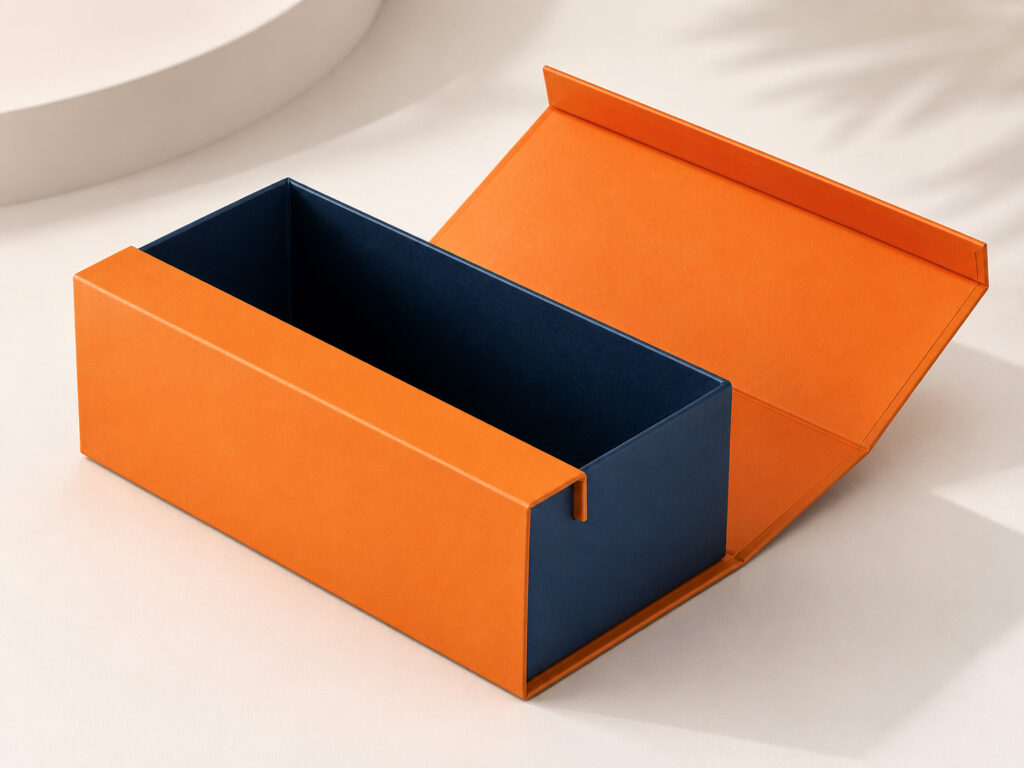
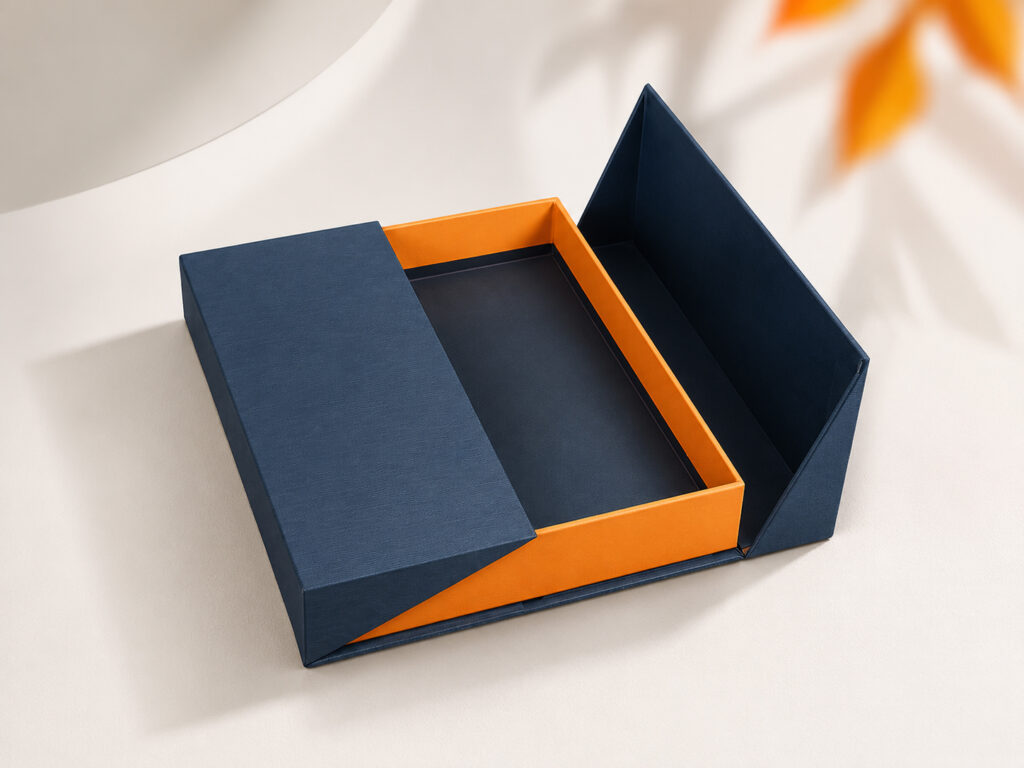
A two piece rigid box consists of two main parts: a separate lid and a base, each wrapped independently and joined when the box is closed. Unlike folding cartons that self-assemble from a flat blank, rigid setup boxes are built from thick greyboard — typically 1,500–2,500 gsm — and wrapped in paper, fabric, or specialty material. The result is a structure with near-zero flex. Corners stay sharp. Walls don’t bow. The box holds its geometry across temperature fluctuations and shipping cycles in a way that folding cartons simply cannot.
The lid fits over the base with controlled tension. That friction isn’t accidental — it’s engineered. A tight lift-off lid communicates precision before the customer sees the product inside. The base carries the structural load: product weight, stacking pressure, and the physical handling of warehousing. Together, the two separate parts form a packaging structure that feels more like a container than a box.
This is a rigid box style that has been the standard for luxury retail for decades because it works. It photographs well, ships with dignity, and holds up through the life of the product — which matters when the box itself is part of the product story.
Two Piece Rigid Box Styles and Configurations
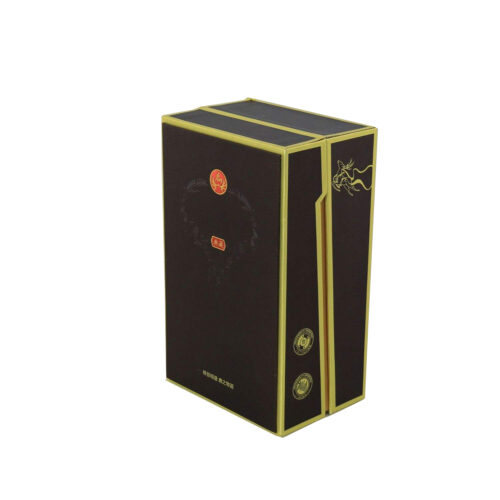
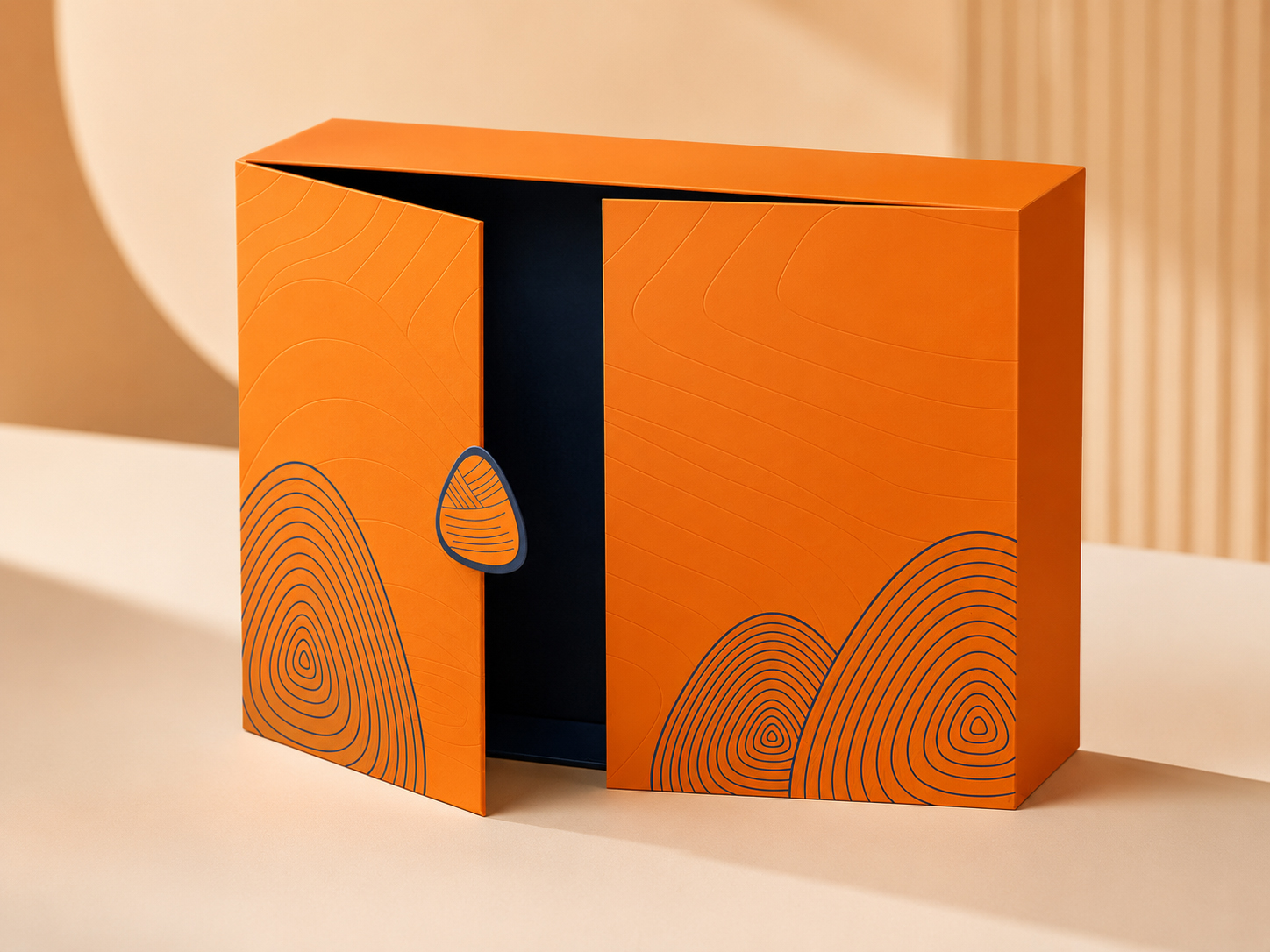
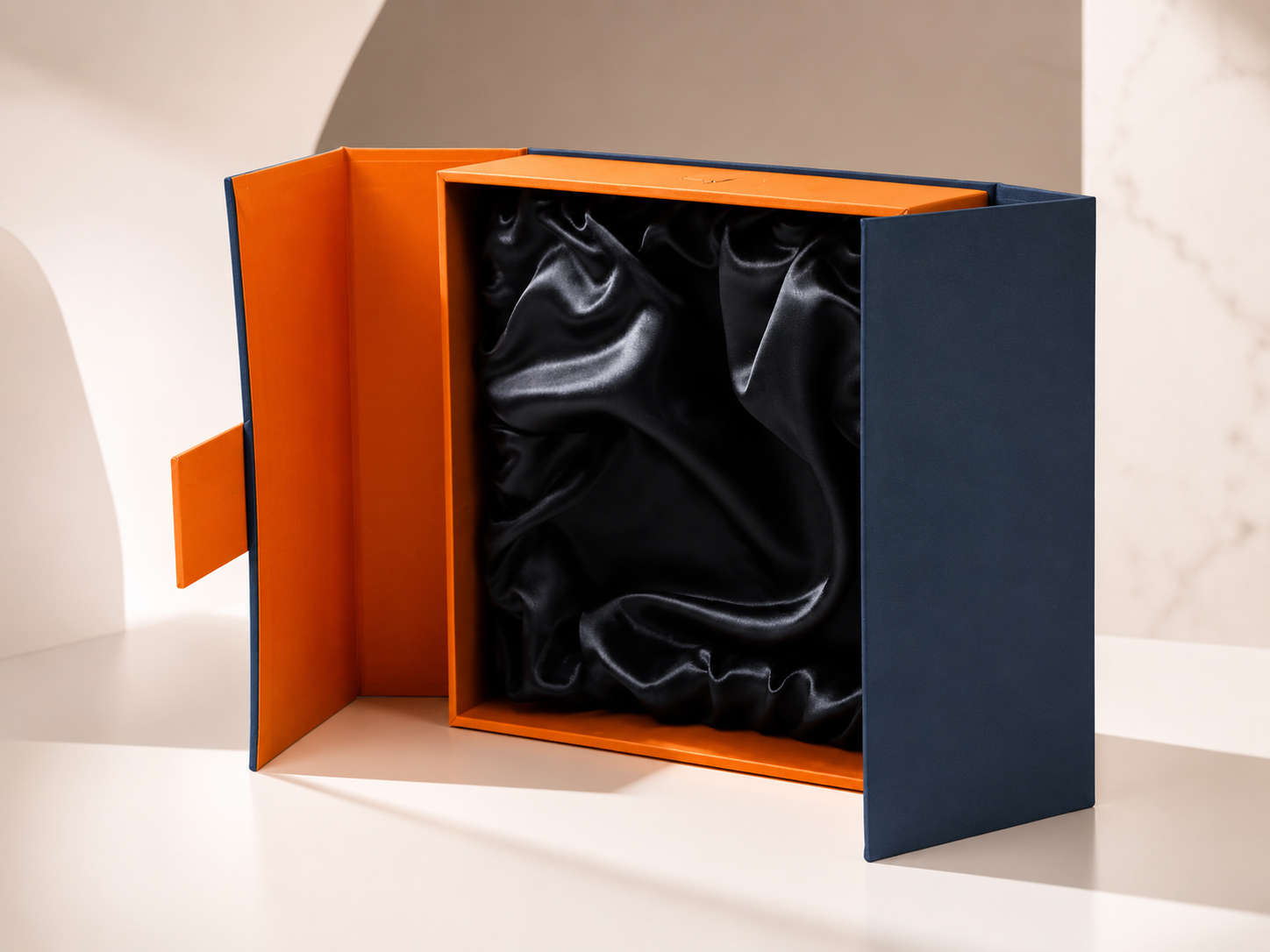
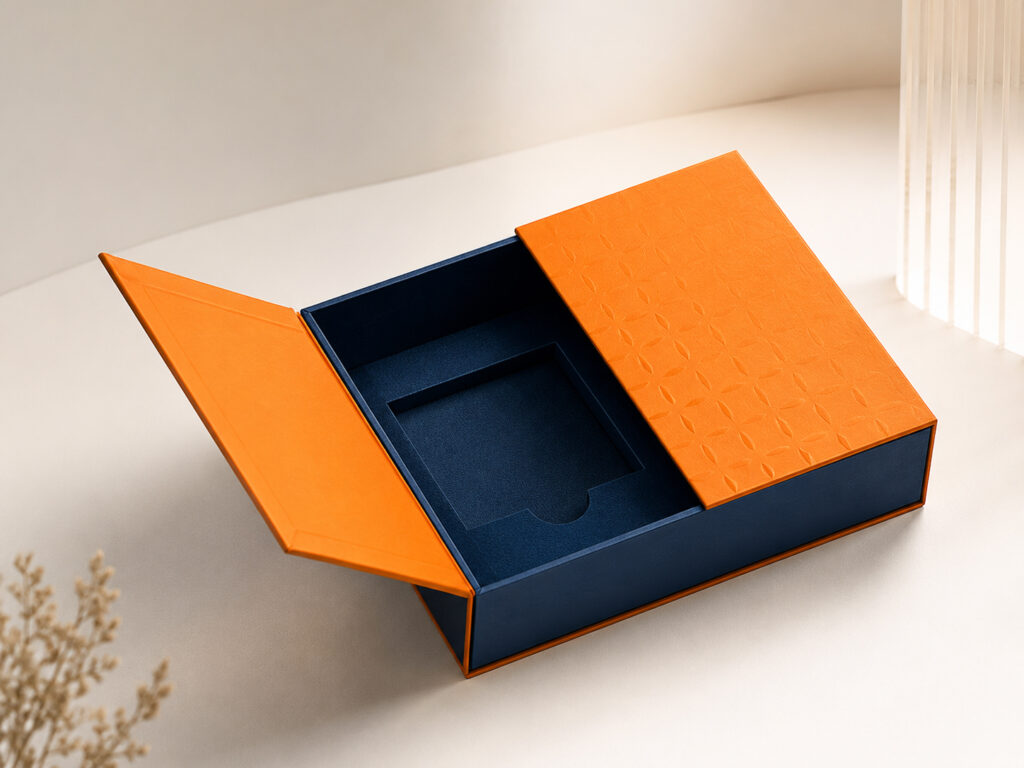
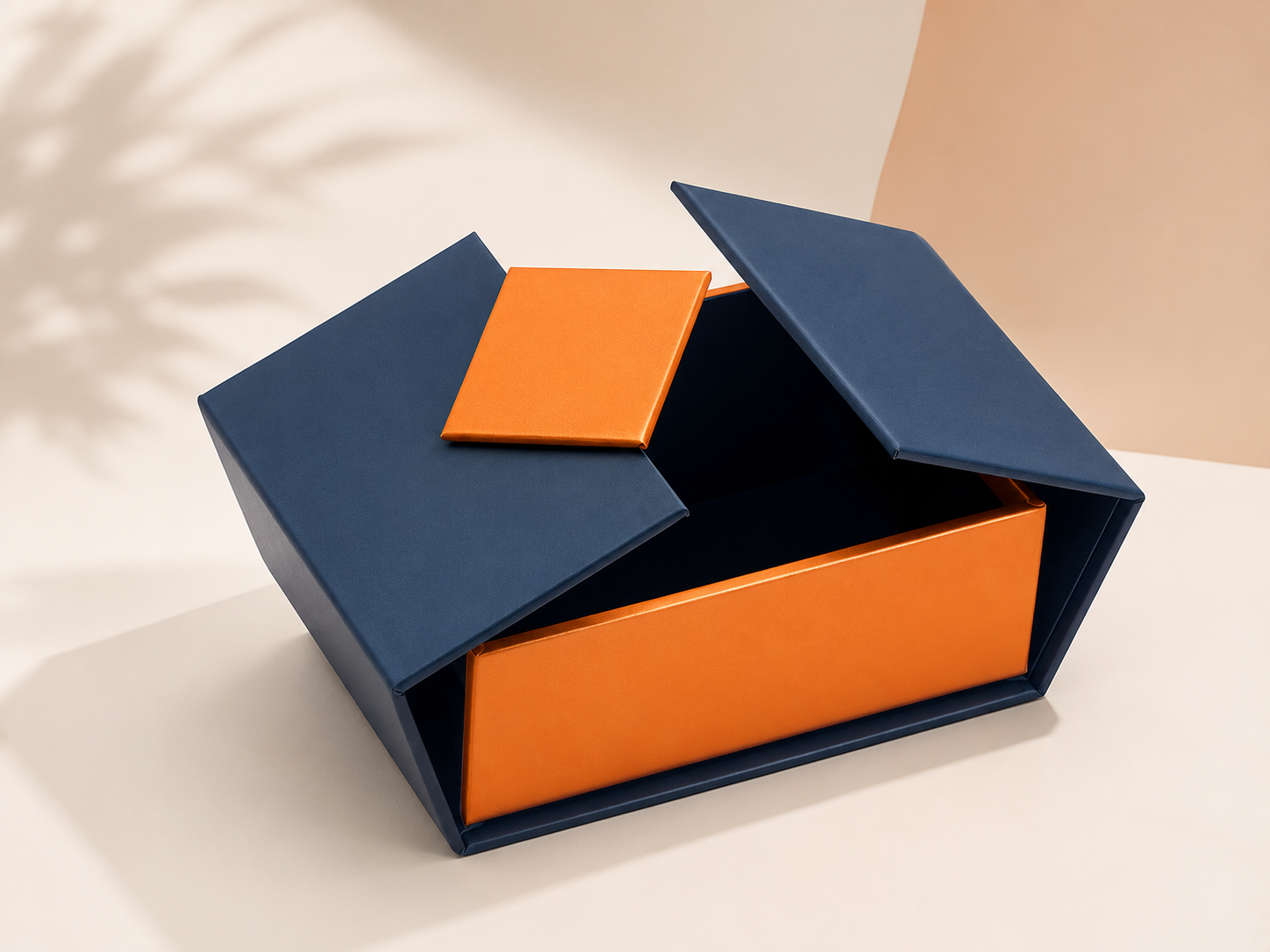
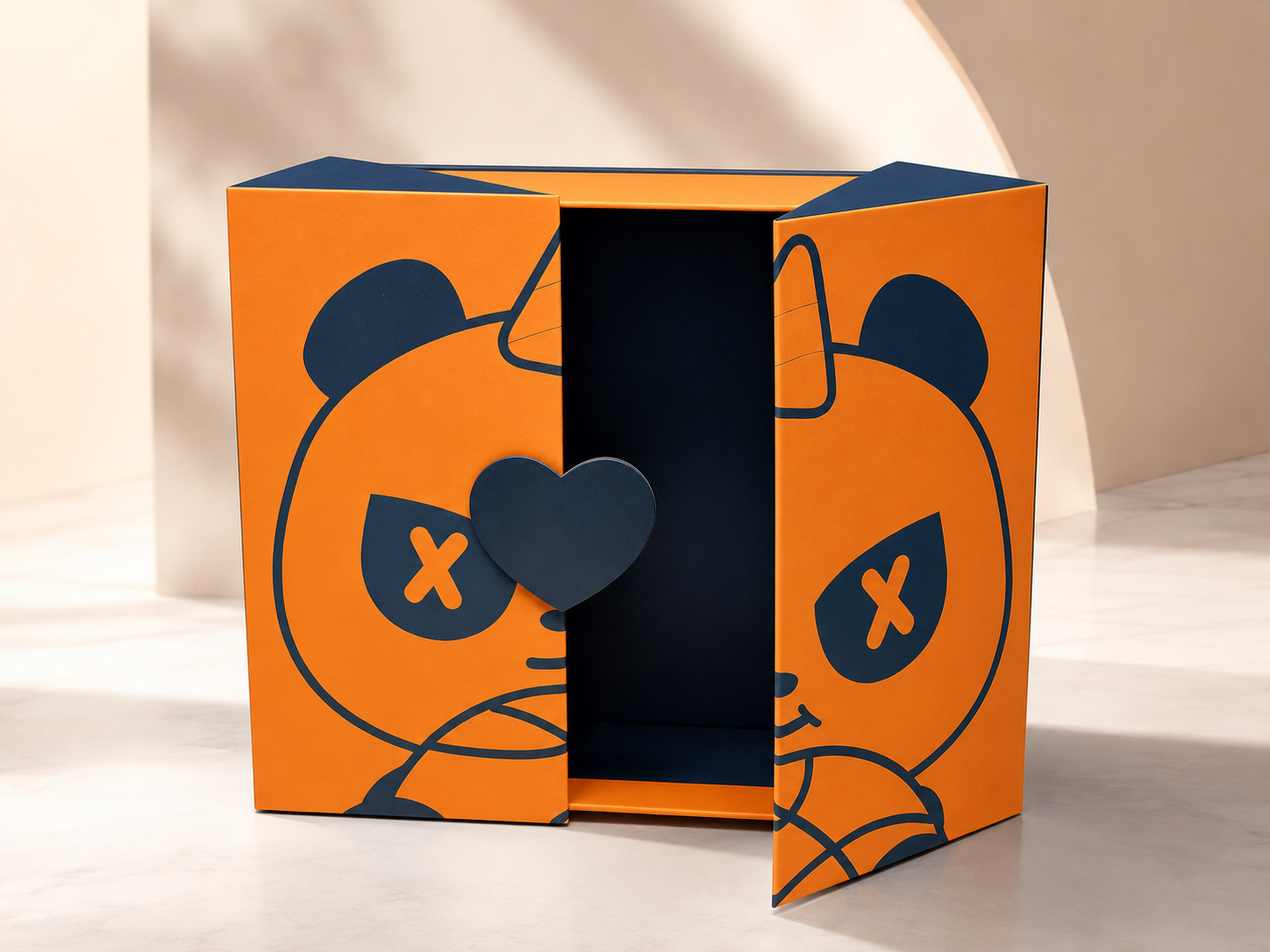
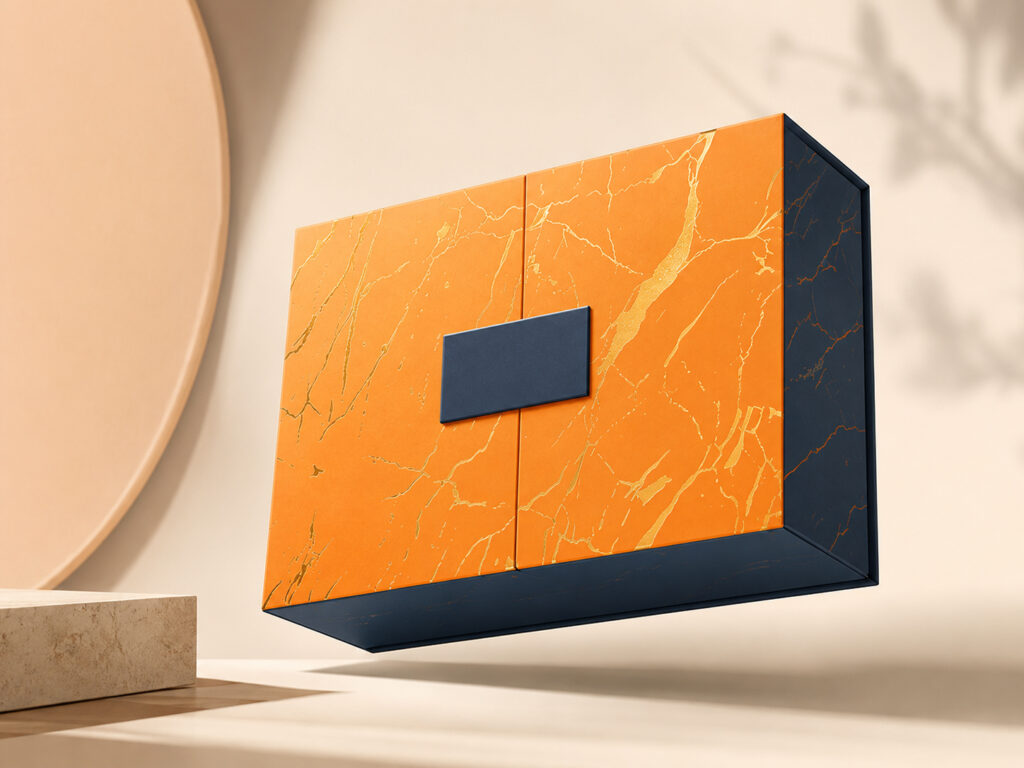
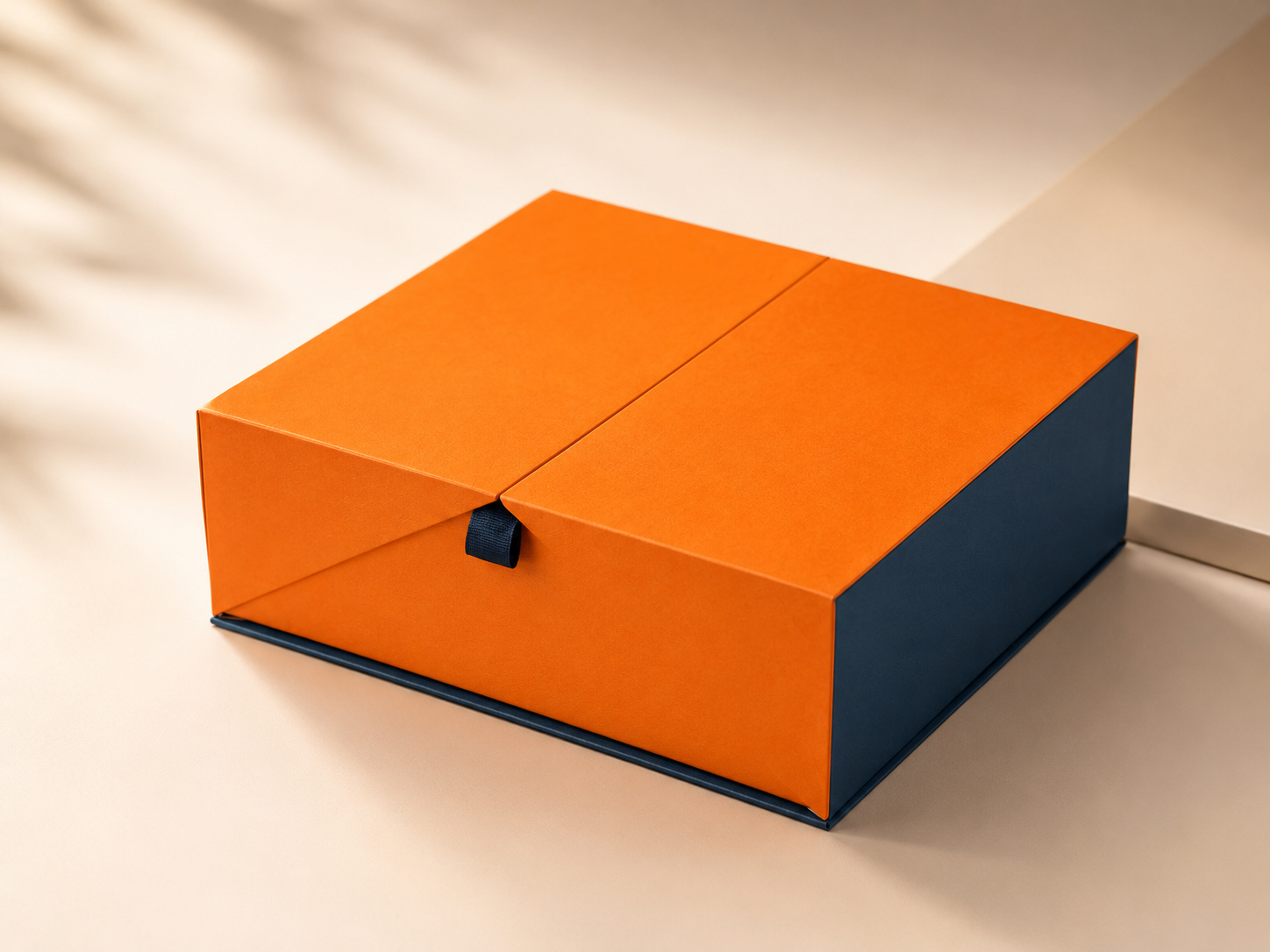
ChengYi’s collection of two-piece rigid boxes spans a wide range of dimensions, finishes, and structural configurations — from compact jewelry packaging to large-format gift box formats. Whether you need a matte-laminated base with foil-stamped lid or a textured linen-wrap piece box with a magnetic closure upgrade, our range covers the production formats most requested by brands in North America, Europe, and the Middle East.
-
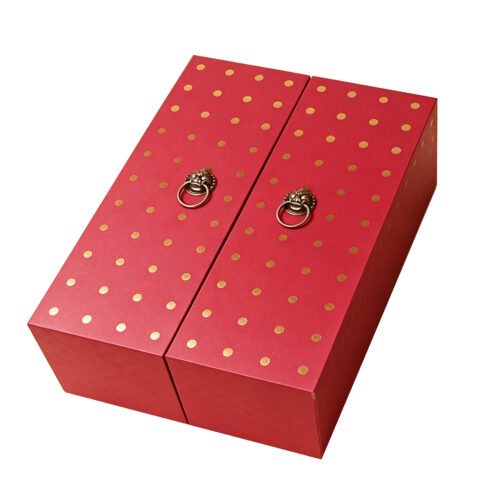
Double-Door Lunar New Year Rigid Gift Box with Ring Pulls

- Box by Shapes, Box by Indutries, Custom Coffee Boxes, Custom Perfume Boxes, Custom Tea Boxes, Two-side Open Rigid Boxes
Red double-door rigid gift box with …
-
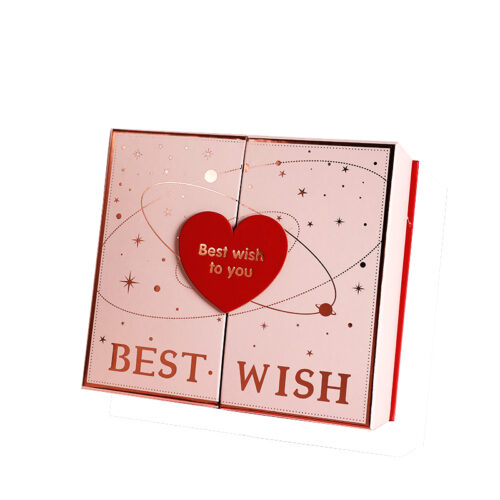
Premium Double-Door Rigid Gift Box with Heart Clasp Lid

- Box by Shapes, Box by Indutries, Custom Cosmetics Boxes, Custom Gifting Boxes, Custom Perfume Boxes, Two-side Open Rigid Boxes
A premium double-door rigid gift box…
Key Features of Our Rigid Boxes: Structure, Finish, and Lid Performance
The defining feature of a rigid box is its structural rigidity — and that starts with the board. ChengYi uses 1,800–2,200 gsm greyboard as the base substrate for standard production, with 2,500 gsm available for heavy-product formats. This density gives the walls their stiffness. But density alone doesn’t make a premium box. The wrapping process is where rigidity becomes presentation. Paper must align cleanly at corners, adhere uniformly across flat panels, and hold tension at folds without bubbling or delamination.
Surface finish is one of the most consequential decisions in packaging design. Our production supports matte lamination, gloss lamination, soft-touch (velvet) lamination, and raw-texture wraps across both lid and base panels. Foil stamping — available in gold, silver, rose gold, holographic, and matte metal variants — can be applied to any wrapped panel. Embossing and debossing add tactile dimension that photography cannot fully capture, which is why both remain popular for luxury spirits, cosmetics, and high-end gift box formats. A box with gold foil stamping on a matte navy wrap is a specific combination, not a generic one — and our engineers build to exactly that spec.
The lid experience is worth considering as a feature in its own right. A top lid that lifts cleanly, holds its position, and closes with consistent resistance creates a repeatable unboxing moment. For brands where that moment is part of the customer journey — subscription boxes, cosmetic kits, collector editions — lid tension tolerance is something we calibrate during sampling. This level of detail is what separates excellent packaging from packaging that just ships.
Custom Two Piece Rigid Box Options: Sizes, Printing, and Interior Configurations
Two-piece rigid boxes are among the most flexible packaging options in the rigid category. Custom sizes are available across the full dimensional range: from compact 60mm × 60mm jewelry inserts up to 400mm × 300mm presentation formats for corporate gifting. We don’t sell fixed-format SKUs and call them custom. Every production run is built to your structural brief — length, width, depth, and lid clearance — with tolerance engineering built into the sample stage.
Printing and finishing flexibility is one of the practical reasons brands switch to a dedicated packaging manufacturer rather than sourcing through trading companies. Custom printed rigid boxes at ChengYi are produced using CMYK offset printing on the wrap paper before application, which means you get consistent ink density, accurate Pantone matching, and no risk of print registration shifting during wrapping. Foil stamping dies are made in-house. Embossing plates are produced from your artwork. The entire process — from your design file to finished box — stays in a single production environment.
Interior customization is where function and brand experience converge. We produce custom inserts in EVA foam, die-cut cardboard, and vacuum-formed tray formats. Ribbon pulls, fabric lining (satin, velvet, kraft), and spot adhesive placement are all standard production options. Custom two-piece rigid boxes with branded inserts are a common request from cosmetics and electronics brands that need the product to arrive in a specific orientation. If you have packaging requirements beyond standard configurations — shoulder neck boxes, neck boxes with ribbon lifts, drawer-style bases — we build those as well.
Rigid Box Materials: What Premium Construction Actually Requires
Rigid boxes are made from greyboard — a dense, machine-compressed paperboard that does not fold, score, or crease under normal handling. The manufacturing process wraps this greyboard core in a finishing material: coated art paper, specialty textured paper, fabric, or leatherette. The result is a rigid board structure that holds its shape permanently. This is the fundamental physical difference between rigid packaging and flexible alternatives like folding cartons or plastic clamshells.
The quality of the greyboard determines long-term performance. Lower-density boards (below 1,200 gsm) tend to warp under humidity and lose corner sharpness over time. ChengYi sources greyboard from certified Chinese mills with consistent density ratings and low moisture content — specifications that matter in humid climates and shipping environments where paper packaging faces real stress. Wrap paper is sourced from FSC-certified stocks where customer requirements specify it.
It’s also worth being specific about what made from rigid stock actually means in production. A rigid box is not converted from a flat blank. It is hand-built — each panel wrapped individually, corners folded and adhered, lid and base assembled separately. This is why rigid setup boxes carry a higher per-unit cost than folding cartons, and why that cost is justified for products where structural failure or poor presentation creates real commercial damage. Paper packaging at this specification level is a deliberate investment, not a commodity purchase.
Which Industries Use Two-Piece Rigid Boxes
The short answer: any industry where the product presentation is part of the brand value proposition. Jewelry packaging is the most established use case — rigid two piece boxes with velvet inserts have been the category standard for fine jewelry retail for generations. The structural protection that a rigid box provides for small, high-value items is difficult to replicate in other formats, and the unboxing experience is directly tied to perceived product value.
Cosmetics brands — particularly those in the premium and masstige segments — rely on two-piece rigid boxes for gift sets, limited editions, and hero product launches. A gift box format with a lift-off lid and custom satin lining communicates craftsmanship before the consumer touches the product. Electronics brands use rigid gift boxes for premium accessories, wearables, and collector editions where the retail environment demands a product packaging statement. Corporate gifting programs across food, spirits, and branded merchandise routinely specify two piece gift boxes because the format is recognizable as “premium” without requiring additional explanation to the recipient.
Subscription box programs are a growing use case. Unlike a mailer, a rigid two piece gift box is something recipients keep — which extends the brand’s presence in the home. Luxury packaging at this level functions as a secondary product. That is not a trivial commercial consideration for brands managing customer lifetime value.
Why Buy Rigid Boxes from ChengYi Packaging
We are a factory, not an agent. That distinction matters because it removes an entire layer from your supply chain — price markups, communication delays, and quality accountability gaps. Our facility runs three production shifts on HEIDELBERG and domestic offset presses, with dedicated wrapping lines for rigid setup boxes. Annual production capacity exceeds 50 million units across paper packaging categories. For rigid two piece boxes wholesale orders, we support large-volume runs with consistent quality standards across batches.
Quality control at ChengYi follows a three-stage inspection model: incoming material inspection at greyboard and wrap paper receipt, in-process inspection at wrapping and assembly, and pre-shipment inspection against buyer-provided specifications. We work with international QC firms for third-party inspection when required. Our production team holds ISO 9001 certification, and FSC chain-of-custody certification is available for brands with sustainability requirements.
We offer custom configurations with MOQ from 100 units for sampling and small-batch programs. Standard production lead time is 15–20 business days from design confirmation, with expedited options available. We ship to North America, Europe, the Middle East, and Southeast Asia via both sea and air freight, and we have working relationships with freight forwarders who understand packaging cargo requirements. Our packaging solution covers the full path from brief to delivery — which is the practical standard a sourcing team should expect from a factory partner.
Rigid Box FAQs: MOQ, Pricing, Samples, and Lead Times
What is your MOQ for custom rigid box orders? Our standard MOQ is 100 units per design, which accommodates brand sampling, limited editions, and small-batch launch programs without requiring a large upfront commitment.
What factors affect pricing on a two piece rigid box order? Price depends on box dimensions, greyboard density, wrap material, surface finish, printing complexity, and any custom inserts or specialty closures — we provide itemized quotes so you can see exactly where cost is allocated.
How does the sampling process work? After design confirmation, we produce a physical sample within 3–5 business days; you review and approve before full production begins — changes to structure, finish, or dimensions can be made at the sample stage at no additional structural charge.
How long does production take once I approve the sample? Standard production lead time is 15–20 business days from sample sign-off; for two piece rigid boxes wholesale volumes above 10,000 units, we recommend discussing scheduling with our team during the quotation stage.
What packaging requirements do you need from me to start a quote? We need your target box dimensions, approximate product weight, preferred finish and print specifications, quantity, and destination market — a design file (AI, PDF, or dieline) is helpful but not required at the initial inquiry stage.
Do you produce shoulder neck boxes or other rigid box variants? Yes — in addition to standard lift-off lid formats, we produce shoulder neck boxes, 2-piece rigid box formats with magnetic closures, drawer-style rigid boxes, and custom two-piece boxes with ribbon pull inserts; describe your packaging requirements and we’ll confirm what’s achievable.
How to Order Custom Two Piece Rigid Boxes
The process starts with your brief. Send us your product dimensions, target quantity, preferred finish, and any reference samples or brand guidelines you’re working from. Our team turns around an initial quote within 24–48 hours — no lengthy RFQ forms, no agent middleware. From there, we move into design confirmation: your artwork is reviewed against our technical requirements, a structural dieline is issued, and any adjustments are made before production begins.
Once you approve the sample, production commences on the agreed schedule. We send production progress updates and pre-shipment inspection documentation before goods leave the factory. Freight is coordinated with your chosen forwarder or through our logistics partners. The order custom two piece rigid process is straightforward because we’ve built it to be — the complexity is in our production facility, not in your purchasing experience. To start, request a quote or ask for a sample of our rigid box range using the contact form on this page. We’ll take it from there, one step at a time.
Key Takeaways
- A two piece rigid box consists of a separate lid and a base built from dense greyboard — a packaging structure that holds its geometry, protects its contents, and communicates quality before the product is seen.
- Custom rigid boxes are available in any dimension, with full surface finish options including foil stamping, embossing, soft-touch lamination, and specialty wrap materials.
- ChengYi is a direct-to-factory packaging manufacturer with ISO 9001 certification, FSC capability, and annual capacity exceeding 50 million units across rigid and paper packaging categories.
- MOQ starts at 100 units, structural sampling completes in 3–5 business days, and standard production lead time is 15–20 business days from sample approval.
- Interior options — EVA foam inserts, velvet lining, satin ribbon pulls, vacuum-formed trays — are all standard production capabilities, not add-on services.
- This box style is used across jewelry packaging, cosmetics, electronics, corporate gifting, and subscription programs because it consistently delivers an unboxing experience that reflects well on the brand inside.
- Two piece rigid boxes wholesale pricing is competitive when sourced direct from a factory with dedicated rigid box production lines — our team provides itemized quotes with no hidden charges.
Get a Free Quote on Custom Rigid Box Packaging
You’ve seen what’s possible. Now let’s talk about your specific packaging needs. Whether you have a detailed technical brief or just a product and a rough size in mind, our team can work with either starting point. Fill in the form below — it takes under two minutes — and a packaging specialist will follow up within one business day with a quote, material recommendations, and, if helpful, a reference sample from our existing range.
We work with brands at every stage: early-stage founders sourcing their first custom rigid box run, established labels expanding into new packaging options, and procurement teams managing large-volume replenishment. Whatever your position in that spectrum, the process is the same — you tell us what you need, we tell you what’s possible, and we move fast.