
High-Precision Rigid Gift Box Engineering: Materials, Structure, and Production Stability
Materials Engineering: Balancing Board Density, Paper Compatibility, and Structural Strength
The performance of a rigid gift box is determined by the interaction of three material layers: greyboard, wrapping paper, and adhesive coating. For procurement teams evaluating structural stability and long-term supply consistency, understanding these variables is essential.
ChengYi works with long-term partnered paper mills to ensure greyboard density remains stable across batches, helping maintain structural consistency for bulk orders. In most rigid box programs, greyboard densities in the range of 1200–1800gsm cover typical requirements. Higher-density greyboard provides notable improvements in compression resistance, particularly in export shipments or stacked warehouse environments.
For premium gift packaging—cosmetics, specialty foods, electronics accessories—ChengYi often conducts parallel testing with two or three greyboard densities, allowing purchasing teams to visually compare rigidity, surface flatness, and deformation resistance.
Table 1. Greyboard Density & Structural Performance Ranges
| Greyboard Density (gsm) | Typical Box Types | Structural Characteristics | Notes for Procurement |
|---|---|---|---|
| 1200–1300 gsm | Small rigid boxes, lightweight items | Good rigidity, moderate compression strength | Cost-efficient for mid-range products |
| 1400–1600 gsm | Lid-and-base boxes, drawer boxes | Enhanced deformation resistance; stable for exports | Common choice for custom rigid box suppliers |
| 1700–1800+ gsm | Premium rigid gift boxes, large formats | High compression resistance and minimal warping | Suitable for fragile or high-value items |
ChengYi’s ability to test multiple greyboard densities at the proofing stage helps procurement teams identify a strength-to-cost balance without risking over-engineering or unnecessary material consumption.
Wrapping paper selection also plays a central role. Coated art paper offers smoothness suitable for fine printing; kraft paper brings durability and a natural aesthetic; textured specialty papers enhance tactile perception but require tighter wrapping tolerances. Since humidity affects stretch and adhesion, ChengYi adjusts tension parameters and adhesive coating thickness during production to keep surfaces flat.
Structural Engineering: Rigidity, Opening Mechanics, and Transport Protection
Rigid gift boxes involve numerous structural variations—lid-and-base, book-style, drawer boxes, and magnetic closure boxes. Each structure has a different stress distribution pattern and functional advantage, which directly affects compression performance and opening experience.
In large-volume packaging programs, procurement teams often prioritize stacking safety, load-bearing performance, and assembly precision. ChengYi’s engineering team evaluates these points early in the development process and reinforces vulnerable hinge areas, drawer rails, or lid edges based on the selected structure.
For example, drawer boxes listed in ChengYi’s product catalog typically use an outer sleeve thickness between 1200–1500gsm, delivering stable friction for smooth opening without excessive tightness. Drawer rails are reinforced to prevent warping during long-distance transport.
A magnetic closure box requires precise alignment between the magnet and the board surface; otherwise, the closing force becomes inconsistent. ChengYi adjusts magnet embedding depth within ±0.1mm to maintain reliable closure across thousands of units.
Structural decisions also influence logistics efficiency. Lid-and-base structures generally provide better compression resistance, while book-style boxes optimize internal space usage. Drawer structures offer premium presentation but require additional dimensional consistency in both the sleeve and inner tray.
Lamination Precision: Controlling Adhesive Amount, Paper Tension, and Surface Flatness
Lamination quality is one of the most visible indicators of a factory’s manufacturing reliability. Surface defects such as bubbling, wrinkling, edge cracking, or corner lifting often stem from fluctuations in adhesive application, paper humidity, or pressure uniformity.
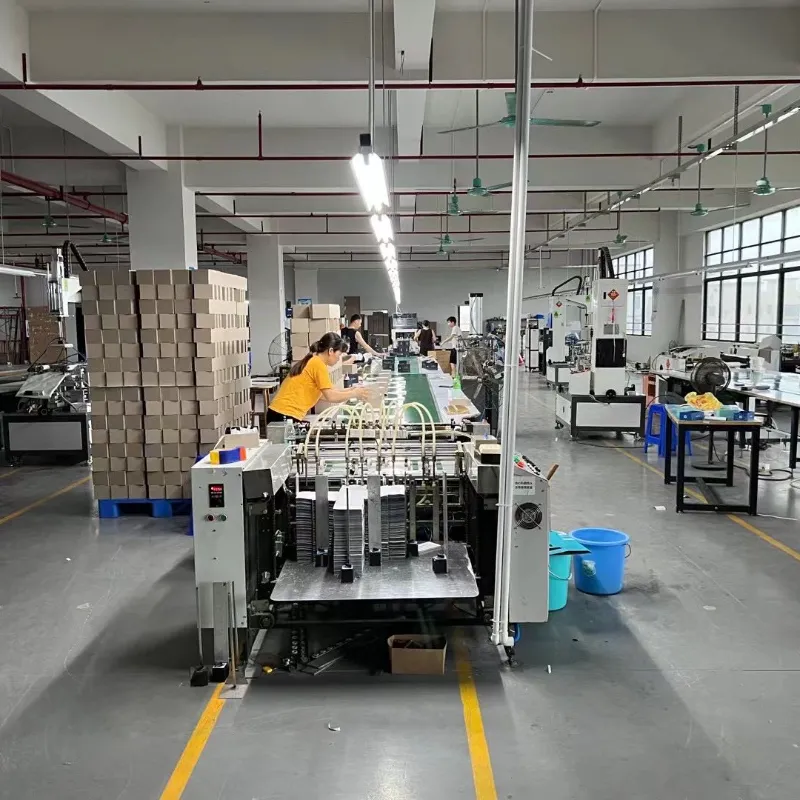
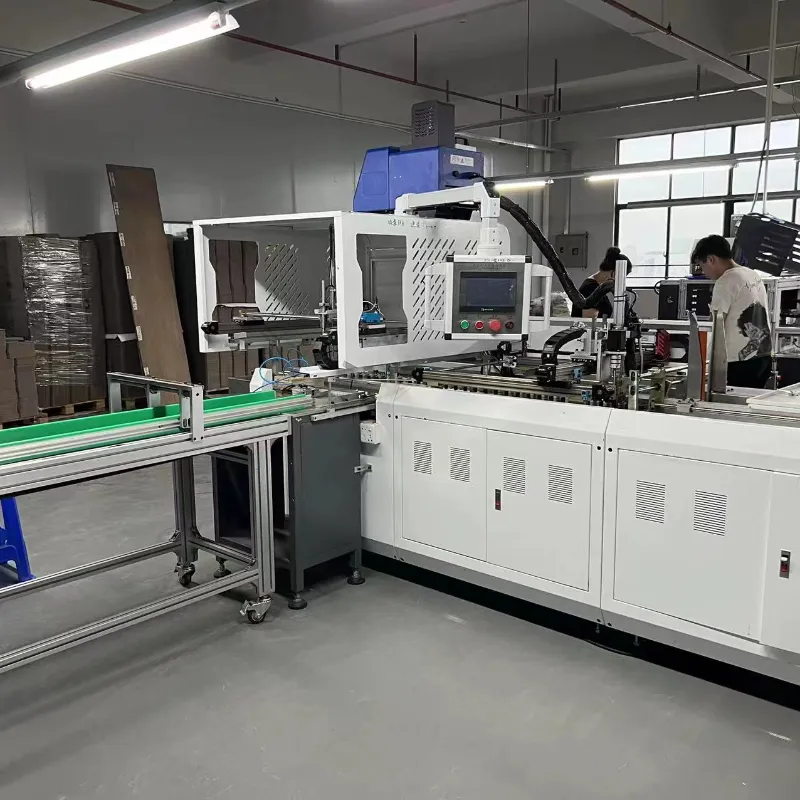
ChengYi employs a combination of semi-automatic and automatic machines depending on order scale and structural complexity. Adhesive volume is controlled within a narrow working range, and paper tension is monitored to prevent overstretching on textured or specialty paper.
Humidity significantly affects paper expansion. Under low humidity, paper contracts and may cause tension lines after lamination; high humidity can trigger bubbling as moisture evaporates unevenly. ChengYi records paper moisture content, adhesive viscosity, and lamination pressure as part of internal quality tracking to maintain stable results across repeated batches.
Corners and folding edges are also structurally sensitive areas. Accurate greyboard beveling helps the wrapping paper fold smoothly without cracking. ChengYi’s beveling angle tolerance follows a strict internal guideline, improving edge uniformity during mass production.
Dimensional Tolerances and Batch Consistency: From Prototyping to Mass Production
Prototyping often yields excellent visual performance, but mass production introduces challenges such as temperature change, greyboard batch variation, and scaling of manual operations. Procurement teams evaluating long-term partners often consider dimensional tolerance control a key indicator of technical capability.
For rigid gift boxes, even a 0.5mm deviation in greyboard or wrapping paper can affect lid tightness, drawer sliding force, or magnet alignment. ChengYi maintains cutting tolerance and alignment deviation within a narrow band to stabilize structure fitment.
To ensure consistency, the factory records sampling data from every production batch and compares it with the approved master sample. This minimizes the risk of dimension drift during long runs or successive reorders.
Areas commonly monitored include:
- Greyboard cutting tolerance
- Drawer sleeve internal width
- Folding edge thickness
- Magnet position deviation
- Lid-and-base overlap depth
Such measurements ensure that large-volume orders maintain uniform appearance and functionality without requiring procurement teams to manage quality issues.
Surface Finishing and Brand Presentation: Engineering Compatibility Between Paper and Processes
Rigid gift boxes rely heavily on finishing techniques to communicate brand identity. However, each finishing method must be compatible with the chosen wrapping paper and greyboard density.
Table 2. Finishing Processes & Material Compatibility Overview
| Finishing Process | Compatible Papers | Sensitive Papers | Engineering Considerations |
|---|---|---|---|
| Hot stamping | Coated paper, kraft paper | Deep-texture papers | Requires stable temperature & pressure |
| Spot UV | Coated art paper | Matte rough papers | Needs a smooth surface for adhesion |
| Embossing/Debossing | Thick specialty papers | Thin papers | High-pressure process; depth must match board hardness |
| Soft-touch lamination | Coated art paper | Natural fiber papers | Sensitive to humidity and adhesive thickness |
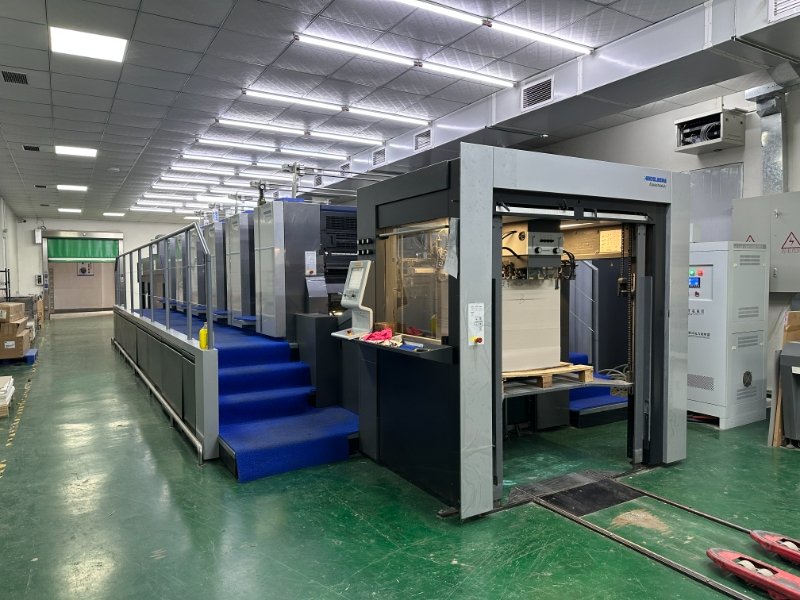
In high-precision rigid box manufacturing, finishing defects often arise when the pressure, temperature, or registration alignment deviates slightly across batches. ChengYi conducts pre-production testing to confirm whether a selected specialty paper—especially those with deep textures—can withstand hot stamping or embossing without surface damage.
For large orders, maintaining finishing consistency is equally essential. Registration alignment for hot stamping is controlled within a narrow tolerance range, and embossing depth is calibrated based on the hardness of both paper and greyboard.
Packaging & Logistics Efficiency: How Structure and Materials Affect Space Utilization
Transport cost is influenced not only by box quantity but also by material thickness, structural type, and carton arrangement. High-density greyboard increases protection but also increases weight and volume. In contrast, efficient structural engineering can reduce carton volume without compromising rigidity.
ChengYi works with procurement teams to optimize packing patterns for each rigid box structure. Lid-and-base boxes often nest efficiently with slight lid adjustments; drawer box sleeves can be rotated to improve carton density. Under typical optimization, carton utilization can improve by a modest but meaningful percentage, depending on box dimensions.
ChengYi’s experience across multiple sectors—gifts, consumer products, specialty retail—enables the factory to provide space-efficient packing configurations in early sampling stages, helping procurement teams predict container loading more accurately.